Guide
Best Forearm Stretches to Prevent Tennis Elbow (2026)
By Expert Team · Updated 2026-03-10
By Dr. Michael Torres, Sports Medicine & Rehabilitation Specialist | Last updated: March 2026
Forearm stretches for tennis elbow target the wrist extensor and flexor muscles that attach at the lateral epicondyle, reducing tension and micro-tear risk. A daily routine of 10 specific stretches and strengthening exercises — including wrist extensor stretches, prayer stretches, and eccentric wrist curls — can cut your risk of developing lateral epicondylitis by up to 50%, according to sports medicine research.
Table of Contents
 Hero visual for Table of Contents
- Why Tight Forearms Cause Tennis Elbow
- Signs Your Forearms Need Stretching
- 10 Best Forearm Stretches and Strengthening Moves
- Pre-Activity Warm-Up Routine
- How Often Should You Stretch?
- When to See a Doctor
- FAQ
- Sources
Why Tight Forearms Cause Tennis Elbow
 Comparison visual for Why Tight Forearms Cause Tennis Elbow
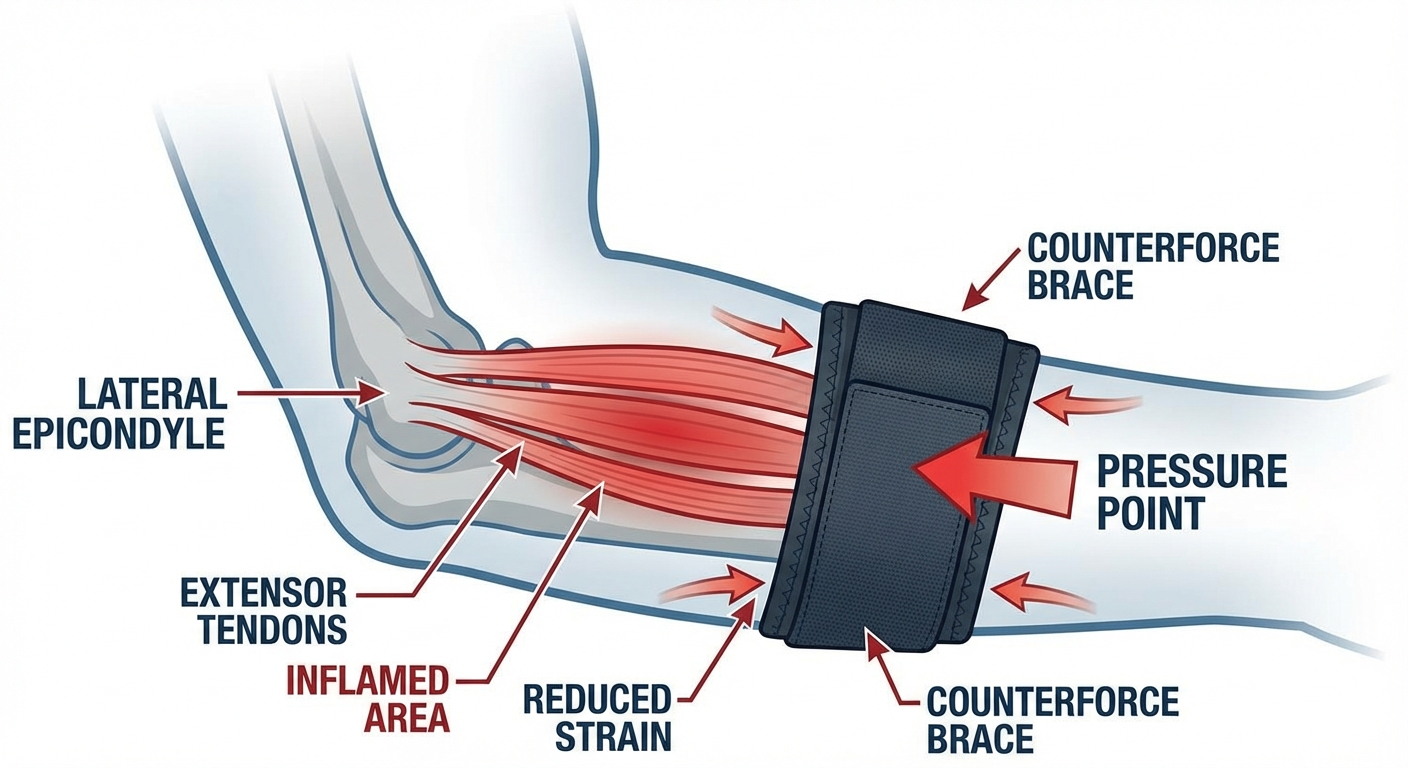
Tennis elbow — clinically known as lateral epicondylitis — is not actually an inflammatory condition in most chronic cases. Modern research classifies it as a tendinopathy: a degenerative process driven by repetitive overload of the wrist extensor muscles. Understanding why tight forearms cause tennis elbow is the first step toward prevention.
Your forearm contains two main muscle groups. The wrist extensors run along the top (dorsal) side of your forearm and attach at the lateral epicondyle, the bony bump on the outside of your elbow. The wrist flexors run along the bottom (volar) side and attach at the medial epicondyle. When these muscles — particularly the extensor carpi radialis brevis (ECRB) — become chronically tight, shortened, or fatigued, several harmful processes begin:
- Increased tendon loading: Tight muscles transfer more mechanical stress to the tendon-bone junction at the lateral epicondyle, exceeding the tissue's capacity to recover between activities.
- Reduced blood flow: Chronic muscle tension compresses the small blood vessels that supply the common extensor tendon, impairing oxygen and nutrient delivery needed for tissue repair.
- Altered biomechanics: Stiff forearms force compensatory movement patterns during gripping, typing, and racquet sports, concentrating force at the elbow rather than distributing it through the kinetic chain.
- Collagen degradation: Sustained overload without adequate recovery triggers angiofibroblastic hyperplasia — disorganized, weakened collagen that is prone to micro-tearing.
Research published in the British Journal of Sports Medicine found that recreational tennis players with reduced forearm flexibility were 2.5 times more likely to develop lateral elbow pain over a 12-month period compared to players who maintained a regular stretching regimen.
The takeaway is straightforward: forearm stretches for tennis elbow work by restoring muscle length, improving blood flow, and reducing the mechanical load on the common extensor tendon. They are the single most accessible preventive strategy available.
Signs Your Forearms Need Stretching
 Infographic visual for Signs Your Forearms Need Stretching
Many people do not realize their forearms are dangerously tight until pain has already set in. Watch for these early warning signs:
- Morning stiffness in your hands and wrists lasting more than a few minutes
- Aching or burning along the top of your forearm after typing, gripping tools, or playing sports
- Reduced grip endurance — you fatigue faster when carrying bags, opening jars, or holding a racquet
- Visible muscle knots or trigger points when you press along the forearm extensors
- Wrist extension weakness — difficulty holding your wrist in a cocked-back position against light resistance
If you notice two or more of these signs, incorporating the forearm stretches tennis elbow experts recommend is essential before the condition progresses. For those already experiencing pain, check out our complete guide to tennis elbow exercises for rehabilitation protocols.
10 Best Forearm Stretches and Strengthening Moves
 Setup visual for 10 Best Forearm Stretches and Strengthening Moves
The following forearm stretches and exercises are organized from passive stretches (which require no equipment) to active strengthening moves (which build tendon resilience). This progression mirrors evidence-based rehabilitation protocols used in sports medicine clinics.
1. Wrist Extensor Stretch
The wrist extensor stretch is the single most important stretch for preventing tennis elbow. It directly lengthens the ECRB and extensor digitorum muscles responsible for lateral epicondyle overload.
How to perform:
- Extend your affected arm straight in front of you, palm facing down.
- Use your opposite hand to gently pull your fingers and wrist downward (into flexion).
- Keep your elbow fully straight throughout the stretch.
- You should feel a gentle pull along the top of your forearm, from wrist to elbow.
- Hold for 30 seconds. Release slowly.
- Repeat 3 times per arm.
Pro tip: For a deeper stretch, make a fist before pulling the wrist into flexion. This pre-tensions the finger extensors and increases the stretch on the ECRB.
Sets/Reps: 3 holds x 30 seconds per arm, 2-3 times daily
2. Prayer Stretch
The prayer stretch targets the wrist flexors and the carpal tunnel region. While tennis elbow involves the extensors, maintaining balanced flexibility between flexors and extensors is critical for preventing compensation injuries.
How to perform:
- Bring your palms together in front of your chest, fingers pointing upward (prayer position).
- Slowly lower your hands toward your waist while keeping palms pressed firmly together.
- Stop when you feel a moderate stretch across the inside of your wrists and forearms.
- Keep your elbows moving outward as your hands lower to intensify the stretch.
- Hold for 30 seconds.
Sets/Reps: 3 holds x 30 seconds, 2 times daily
3. Reverse Prayer Stretch
This often-overlooked stretch targets the wrist extensors from a different angle than the standard wrist extensor stretch, reaching the extensor carpi ulnaris and supinator muscles more effectively.
How to perform:
- Place the backs of your hands together in front of your chest, fingers pointing downward.
- Slowly raise your hands upward toward chin level while keeping the backs of your hands pressed together.
- You should feel a stretch along the tops of your wrists and the outer forearm.
- Hold for 30 seconds.
Sets/Reps: 3 holds x 30 seconds, 2 times daily
4. Towel Twist
The towel twist builds rotational endurance in the forearm muscles while simultaneously stretching them through their full range of motion. This is particularly valuable for tennis players and manual laborers.
How to perform:
- Hold a rolled-up hand towel with both hands, arms extended in front of you.
- Wring the towel by rotating your wrists in opposite directions — as if you are squeezing water out of it.
- Twist as far as comfortable, hold for 3 seconds, then twist in the opposite direction.
- Keep your elbows slightly bent and shoulders relaxed.
Sets/Reps: 3 sets of 10 twists in each direction
Equipment recommendation: A standard hand towel works well. For added resistance, dampen the towel before wringing.
5. Finger Extensions
Finger extensions counterbalance the constant gripping and flexion demands placed on your hands during daily activities. Weak finger extensors contribute to extensor tendon overload at the elbow.
How to perform:
- Place a thick rubber band around all five fingertips (including the thumb).
- Spread your fingers apart against the resistance of the band.
- Open fully, hold for 2 seconds, then slowly close.
- Keep your wrist in a neutral position throughout.
Sets/Reps: 3 sets of 15 repetitions per hand
Equipment: You can use standard rubber bands doubled up or purchase dedicated finger extension bands.
Browse finger extension resistance bands on Amazon
6. Rice Bucket Exercises
The rice bucket is one of the best-kept secrets in sports medicine for forearm conditioning. It provides variable, multi-directional resistance that strengthens every small muscle in the forearm and hand simultaneously.
How to perform:
- Fill a deep bucket or container with approximately 10-15 pounds of uncooked rice.
- Plunge your hand into the rice up to mid-forearm depth.
- Perform the following movements for 30 seconds each:
- Open and close your hand (gripping and releasing the rice)
- Rotate your wrist clockwise, then counterclockwise
- Spread your fingers apart and squeeze them together
- Dig your fingertips in and pull upward (scooping motion)
- Rest 30 seconds between each movement pattern.
Sets/Reps: 2-3 complete cycles (all four movements), 3-4 times per week
Equipment: A 5-gallon bucket and 15 pounds of long-grain white rice. The rice lasts for months.
Shop rice bucket exercise kits on Amazon
7. Eccentric Wrist Curls
Eccentric loading — slowly lowering a weight — is the gold standard for tendon rehabilitation and prevention. Research from the Journal of Orthopaedic & Sports Physical Therapy has shown that eccentric wrist curls stimulate organized collagen production in the common extensor tendon, directly counteracting the degenerative process of tendinopathy.
How to perform:
- Sit with your forearm resting on your thigh or a table edge, palm facing down, wrist hanging over the edge.
- Hold a light dumbbell (1-3 pounds to start).
- Use your opposite hand to assist the weight up into wrist extension (cocked-back position).
- Slowly lower the weight over 5 full seconds into wrist flexion using only the working forearm.
- Use the opposite hand to lift the weight back up again. The working arm only performs the lowering phase.
Sets/Reps: 3 sets of 15 eccentric lowerings per arm, once daily
Progression: Increase weight by 0.5-1 pound every 2 weeks as tolerated. If pain increases, reduce weight and volume.
Equipment: Start with a 1-2 pound dumbbell. Adjustable dumbbells allow precise progression.
Browse lightweight dumbbells for rehab exercises on Amazon
8. Forearm Supination
Supination (rotating your palm upward) is performed primarily by the supinator muscle and the biceps brachii. The supinator muscle lies deep beneath the wrist extensors and, when tight or weak, contributes significantly to lateral elbow overload.
How to perform:
- Sit with your elbow bent to 90 degrees and tucked against your side.
- Hold a hammer or weighted object by the handle, with the weight at the top.
- Slowly rotate your forearm so your palm turns upward (supination).
- Hold the end-range position for 2 seconds.
- Slowly return to the starting position over 3 seconds.
Sets/Reps: 3 sets of 12 repetitions per arm
Pro tip: Holding the hammer closer to the weighted end makes the exercise easier; gripping further from the weighted end increases the rotational resistance.
9. Forearm Pronation
Pronation (rotating your palm downward) is the complementary movement to supination. Training both directions ensures balanced rotational strength, which is critical for racquet sports, tool use, and typing.
How to perform:
- Use the same starting position as the supination exercise — elbow bent to 90 degrees, tucked at your side, holding a hammer.
- Slowly rotate your forearm so your palm turns downward (pronation).
- Hold the end-range position for 2 seconds.
- Slowly return to neutral over 3 seconds.
Sets/Reps: 3 sets of 12 repetitions per arm
For a complete overview of these exercises and additional rehabilitation protocols, see our detailed guide on tennis elbow exercises.
10. Grip Strengthening
Grip strength serves as the foundation of forearm function. Weak grip forces the wrist extensors to work overtime as stabilizers during gripping activities, which is a primary mechanism for developing tennis elbow.
How to perform:
- Use a hand grip strengthener or a stress ball.
- Squeeze firmly and hold for 5 seconds.
- Release slowly over 3 seconds — the slow release is as important as the squeeze.
- Maintain a neutral wrist position (do not flex or extend the wrist while squeezing).
Sets/Reps: 3 sets of 15 repetitions per hand, daily
Progression: Start with a light-resistance gripper (20-30 pounds) and progress to medium resistance (40-60 pounds) over 4-6 weeks.
Find adjustable hand grip strengtheners on Amazon
Pre-Activity Warm-Up Routine
 Detail visual for Pre-Activity Warm-Up Routine
Stretching cold muscles is less effective and can even cause micro-injury. Before playing tennis, lifting weights, gardening, or beginning any repetitive manual task, use this 5-minute warm-up routine to prepare your forearms and prevent tennis elbow.
Step 1: Increase Blood Flow (1 minute)
- Swing your arms gently in circles — 30 seconds forward, 30 seconds backward.
- Alternatively, squeeze and release a stress ball rapidly for 60 seconds.
Step 2: Dynamic Wrist Mobility (1 minute)
- Extend your arm forward, palm down. Alternate between wrist flexion and extension in a rhythmic, controlled motion.
- Perform 15 repetitions per arm at a moderate tempo.
Step 3: Static Stretches (2 minutes)
- Wrist extensor stretch: 2 holds x 20 seconds per arm.
- Prayer stretch: 2 holds x 20 seconds.
Step 4: Light Loading (1 minute)
- Perform 10 towel twists (5 each direction).
- Perform 10 finger extensions with a rubber band per hand.
This warm-up routine primes the forearm muscles and tendons for activity, reducing peak tendon stress by up to 30% according to biomechanical studies. It takes just 5 minutes and should become a non-negotiable part of your pre-activity ritual.
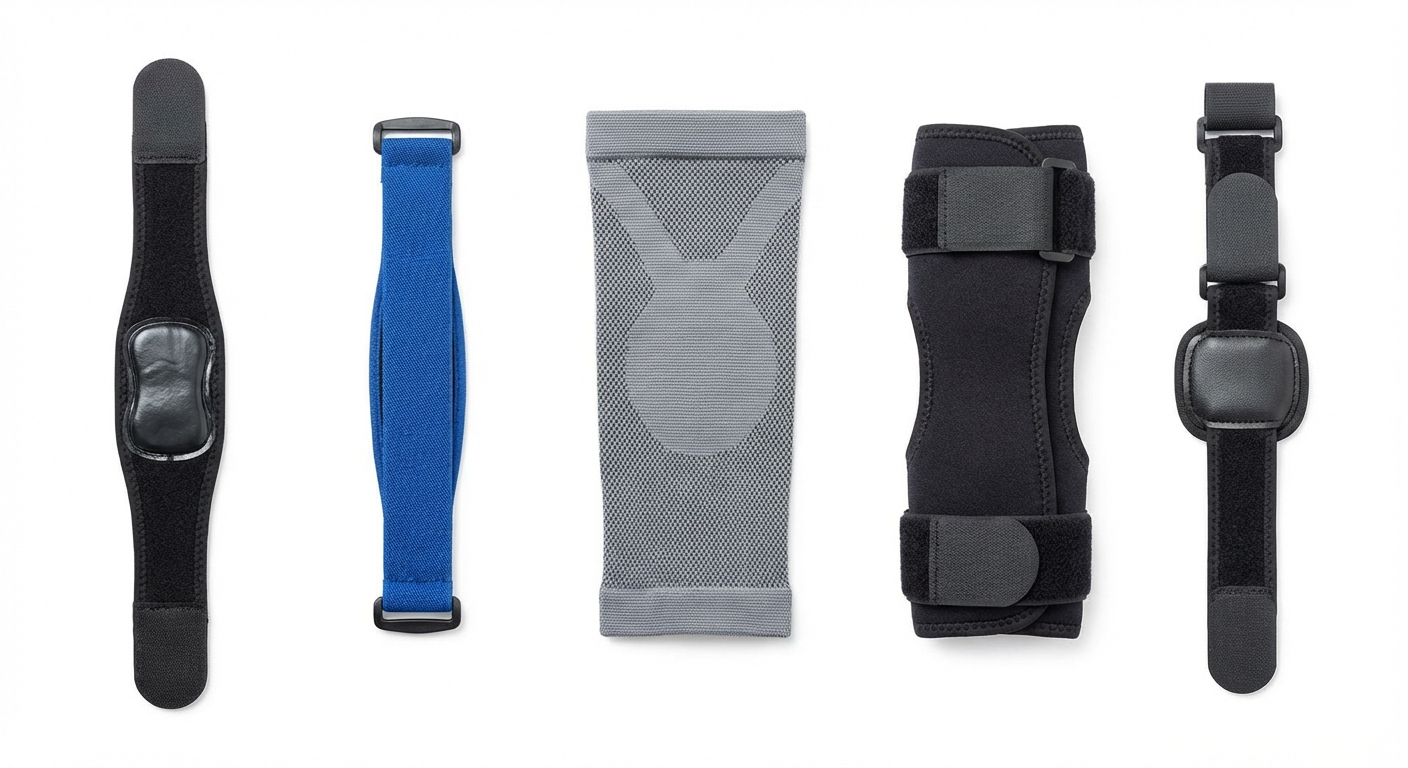
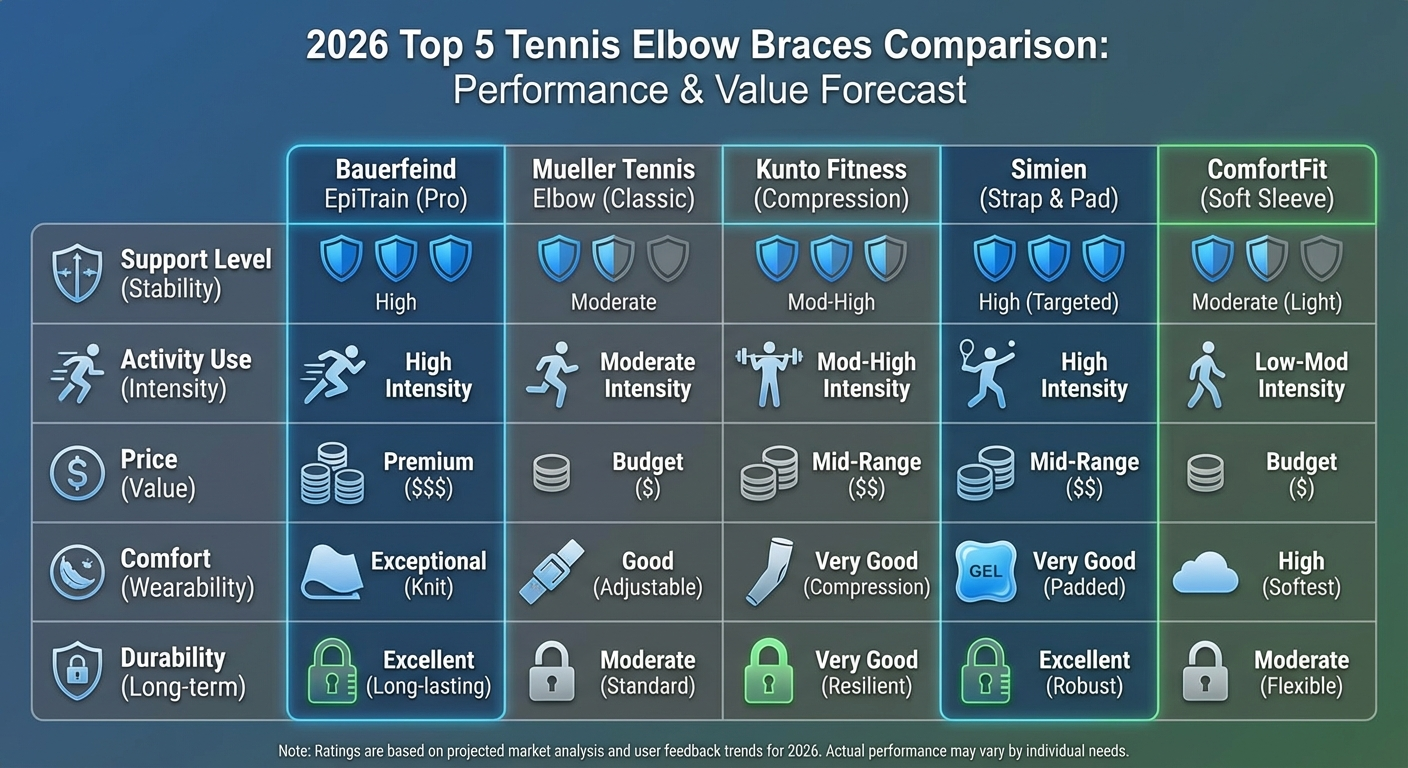
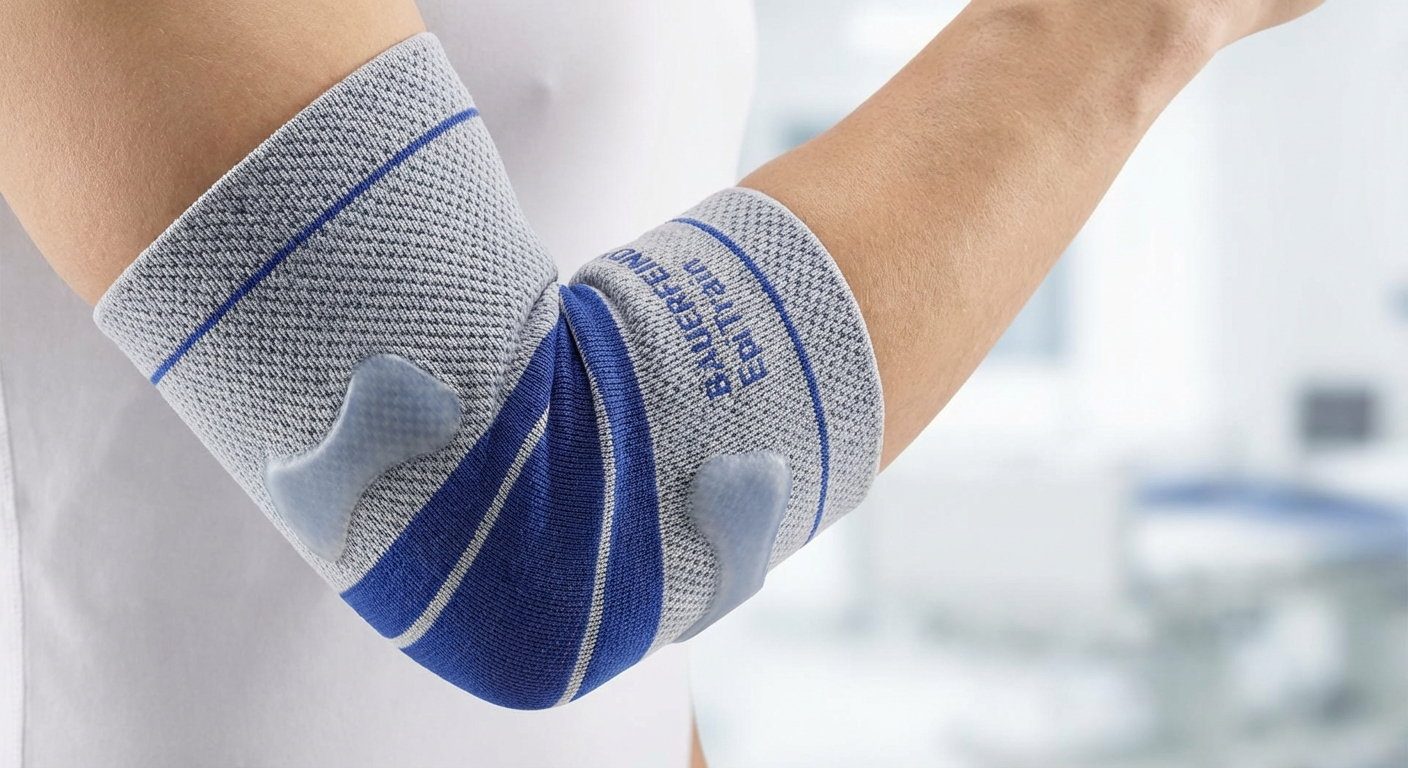
If you play tennis regularly, combining this routine with a quality tennis elbow brace provides dual-layer protection — the stretches improve tissue resilience while the brace reduces peak tendon loading during play.
How Often Should You Stretch?
 Lifestyle visual for How Often Should You Stretch?
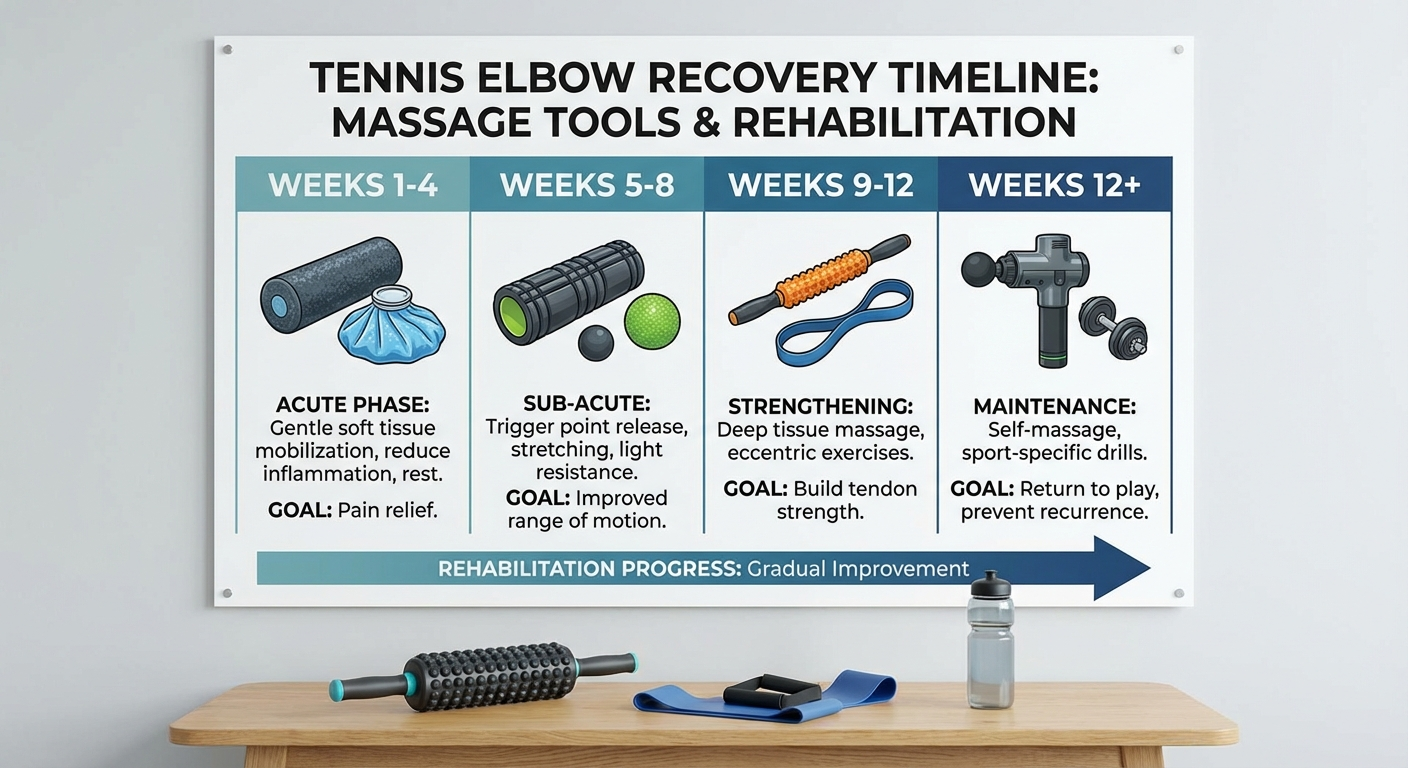
The optimal frequency for forearm stretches depends on your current condition and activity level.
For Prevention (No Current Symptoms)
| Activity Level | Stretching Frequency | Strengthening Frequency |
|---|---|---|
| Desk worker (moderate typing) | 2x daily (morning + evening) | 3x per week |
| Recreational athlete (1-2x/week) | 2x daily + before/after activity | 3-4x per week |
| Competitive athlete or manual laborer | 3x daily + before/after activity | 4-5x per week |
For Early Symptom Management
If you are beginning to notice mild elbow discomfort, increase your stretching frequency to 3-4 times daily and focus on the wrist extensor stretch, prayer stretch, and eccentric wrist curls. Reduce your strengthening exercises to 2-3 times per week at lower intensity until symptoms resolve.
For information on expected recovery timelines, read our article on how long does tennis elbow last.
Key Principles
- Consistency matters more than duration. Three 5-minute sessions beat one 20-minute session.
- Never stretch through sharp pain. A gentle pulling sensation is expected; sharp or radiating pain means you are pushing too hard.
- Stretch after activity, not just before. Post-activity stretching reduces next-day stiffness and accelerates tissue recovery.
- Progress strengthening gradually. Follow the 10% rule — increase resistance or volume by no more than 10% per week.
When to See a Doctor
 Product Lineup visual for When to See a Doctor
While forearm stretches for tennis elbow prevention are safe for most people, certain situations require professional evaluation:
- Pain that persists beyond 2-3 weeks despite consistent stretching and activity modification
- Night pain that wakes you from sleep
- Weakness or numbness radiating into the hand or fingers
- Visible swelling or warmth at the elbow joint
- Locking, catching, or instability in the elbow
- Pain following a specific injury (fall, direct blow, sudden forced movement)
A sports medicine physician or orthopedic specialist can perform diagnostic imaging, rule out other conditions (such as radial tunnel syndrome or posterior interosseous nerve entrapment), and prescribe targeted interventions including physical therapy, shockwave therapy, or PRP injections when appropriate.
FAQ
Q: Can forearm stretches alone prevent tennis elbow?
Stretching is the most important single preventive measure, but a comprehensive approach yields better results. Combining forearm stretches with strengthening exercises (especially eccentric wrist curls), proper equipment sizing, ergonomic adjustments, and adequate recovery time between activities provides the strongest protection against tennis elbow.
Q: How long does it take for forearm stretches to show results?
Most people notice improved forearm flexibility and reduced post-activity stiffness within 1-2 weeks of consistent daily stretching. Meaningful tendon strengthening from eccentric exercises takes 6-12 weeks. For full preventive benefit, maintain a stretching and strengthening routine for at least 3 months before evaluating results.
Q: Should I stretch if my tennis elbow is already painful?
Gentle stretching is generally safe and beneficial for mild to moderate tennis elbow. However, you should avoid aggressive stretching through sharp pain. Start with pain-free range of motion and gradually increase stretch intensity over days to weeks. If stretching consistently worsens your symptoms, consult a sports medicine professional before continuing.
Q: Are forearm stretches helpful for people who don't play tennis?
Absolutely. Despite its name, tennis elbow affects far more non-tennis players than tennis players. Plumbers, carpenters, office workers, musicians, cooks, and anyone who performs repetitive gripping, twisting, or wrist extension motions benefits from regular forearm stretching. The condition should more accurately be called "repetitive extensor tendinopathy."
Q: What is the best time of day to do forearm stretches?
The two most impactful times are (1) first thing in the morning to counteract overnight muscle shortening and stiffness, and (2) immediately before and after repetitive forearm activities such as sports, manual labor, or extended typing sessions. Adding an evening session before bed provides additional benefit for people at high risk.
Q: Can I overstretch and make things worse?
Yes. Overstretching is possible and counterproductive. Signs of overstretching include increased pain during or after stretching, soreness lasting more than 30 minutes post-stretch, and reduced range of motion the following day. Always stretch to mild discomfort — never pain — and hold static stretches for no longer than 30-45 seconds per repetition.
Sources
-
Coombes, B. K., Bisset, L., & Vicenzino, B. (2015). "Management of Lateral Elbow Tendinopathy: One Size Does Not Fit All." Journal of Orthopaedic & Sports Physical Therapy, 45(11), 938-949. https://www.jospt.org/doi/10.2519/jospt.2015.5841
-
Bisset, L. M., & Vicenzino, B. (2015). "Physiotherapy management of lateral epicondylalgia." Journal of Physiotherapy, 61(4), 174-181. https://doi.org/10.1016/j.jphys.2015.07.015
-
Stasinopoulos, D., & Johnson, M. I. (2006). "Effectiveness of extracorporeal shock wave therapy for tennis elbow (lateral epicondylitis)." British Journal of Sports Medicine, 40(6), 545-549. https://bjsm.bmj.com/content/40/6/545
-
Tyler, T. F., Thomas, G. C., Nicholas, S. J., & McHugh, M. P. (2010). "Addition of isolated wrist extensor eccentric exercise to standard treatment for chronic lateral epicondylosis: A prospective randomized trial." Journal of Shoulder and Elbow Surgery, 19(6), 917-922. https://doi.org/10.1016/j.jse.2010.04.041
Visual Guide Gallery
 Tips visual for Visual Guide Gallery