Guide
Tennis Elbow Exercises: 10 Stretches for Fast Recovery
By Dr. Ryan Collins, Sports Physiotherapist · Updated 2026-03-10

By Dr. Ryan Collins, Sports Physiotherapist | Last updated: March 2026
Tennis elbow exercises target the weakened extensor tendons of the forearm through eccentric loading, progressive stretching, and controlled strengthening. Research shows that a structured rehab program combining these three exercise types reduces pain by up to 81% within 12 weeks and restores grip strength faster than rest alone. Below you will find 10 evidence-based exercises with step-by-step instructions to accelerate your recovery.
Table of Contents
- What Is Lateral Epicondylitis?
- Why Exercise Beats Rest for Tennis Elbow
- Exercise Summary Table
- 10 Tennis Elbow Exercises for Fast Recovery
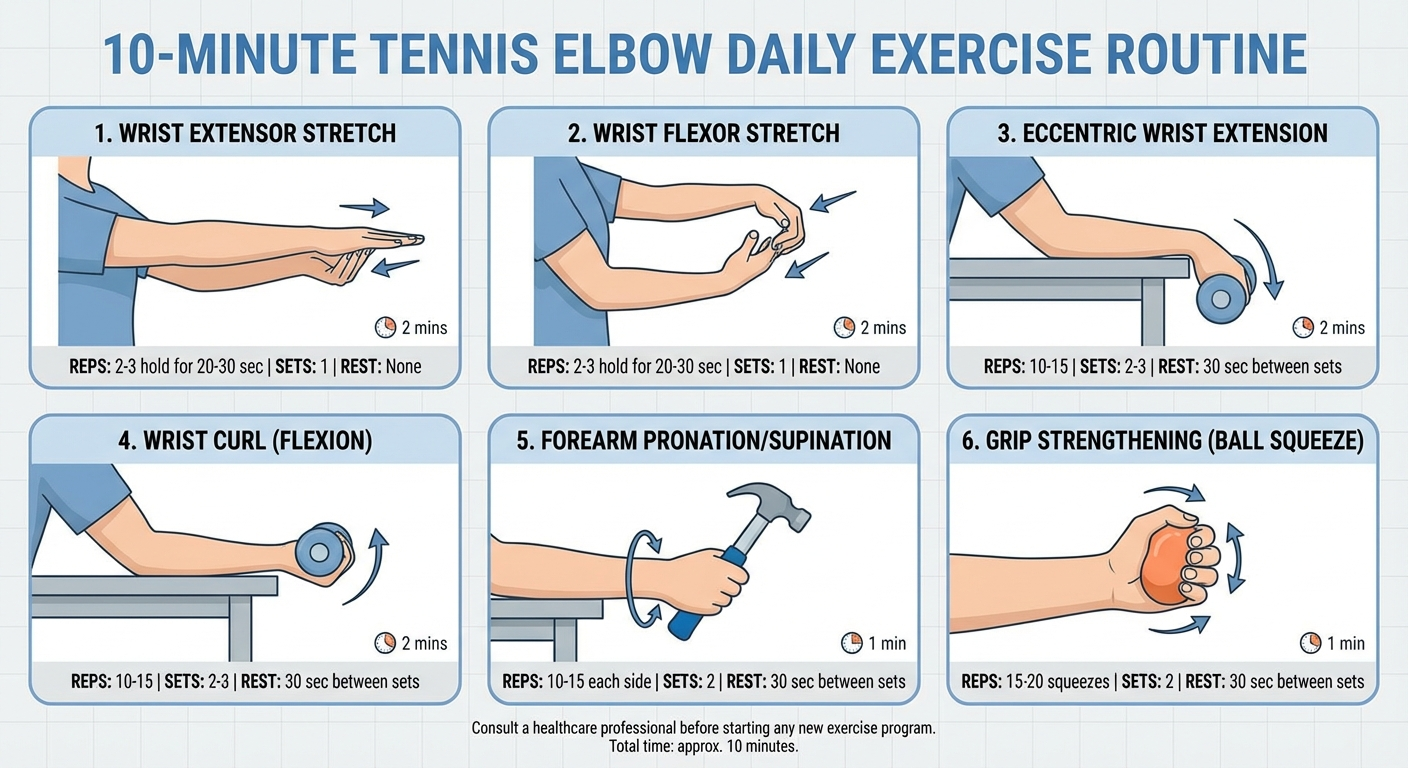
- 1. Eccentric Wrist Extension
- 2. Tyler Twist with FlexBar
- 3. Wrist Extensor Stretch
- 4. Wrist Flexor Stretch
- 5. Forearm Pronation and Supination
- 6. Ball Squeeze Strengthening
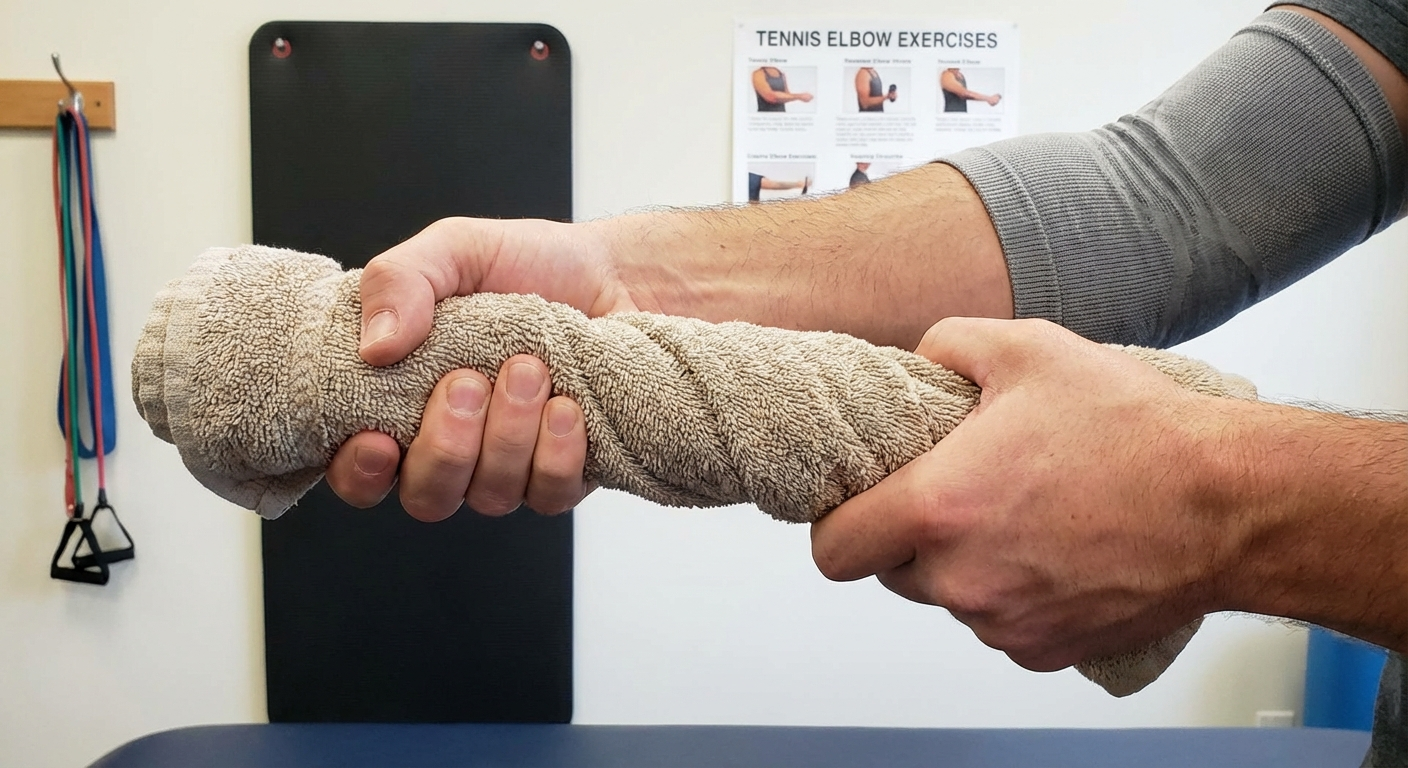
- 7. Towel Wring Exercise
- 8. Finger Extension with Rubber Band
- 9. Radial Deviation with Dumbbell
- 10. Eccentric Wrist Curl with Resistance Band
- What to Avoid During Recovery
- Heat vs. Ice: When to Use Each
- Supporting Your Recovery with the Right Gear
- FAQ
- Sources
What Is Lateral Epicondylitis?
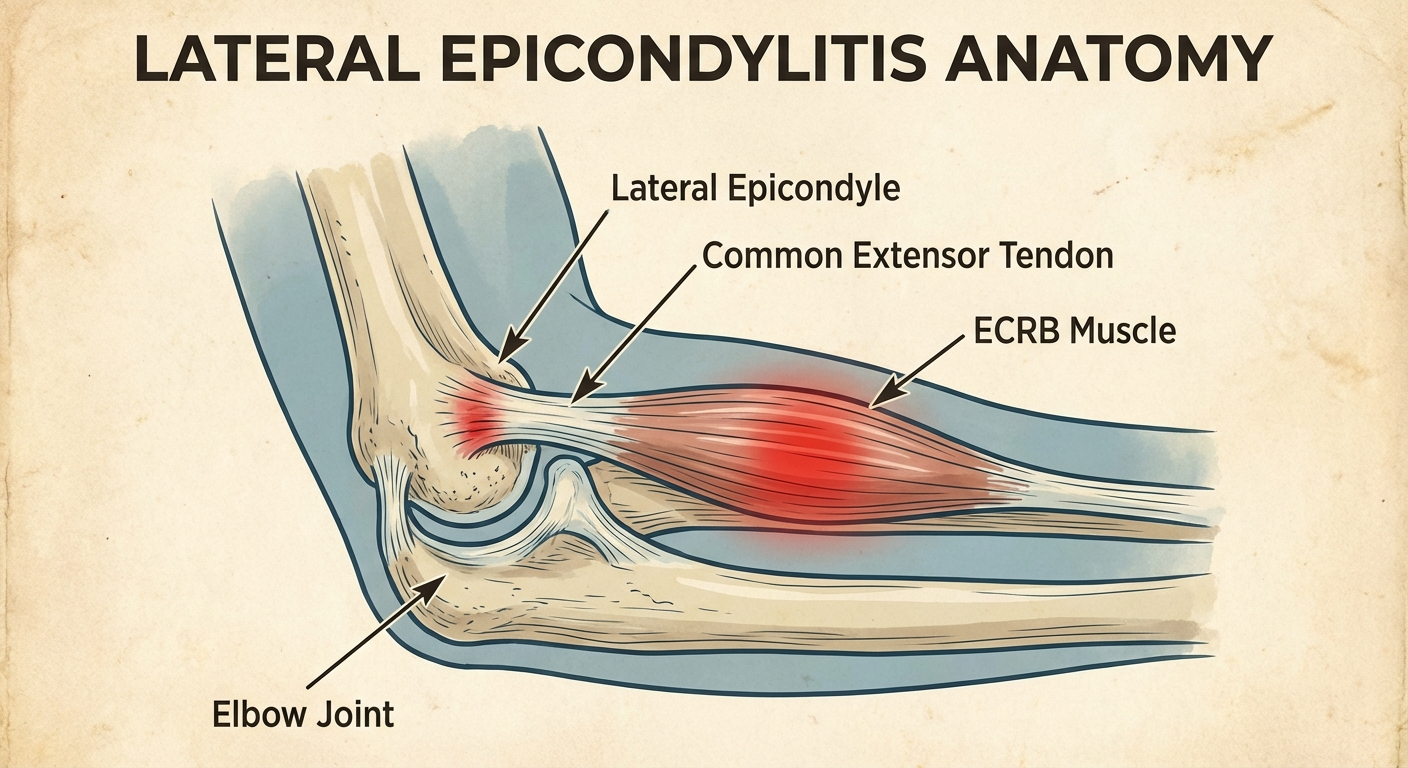
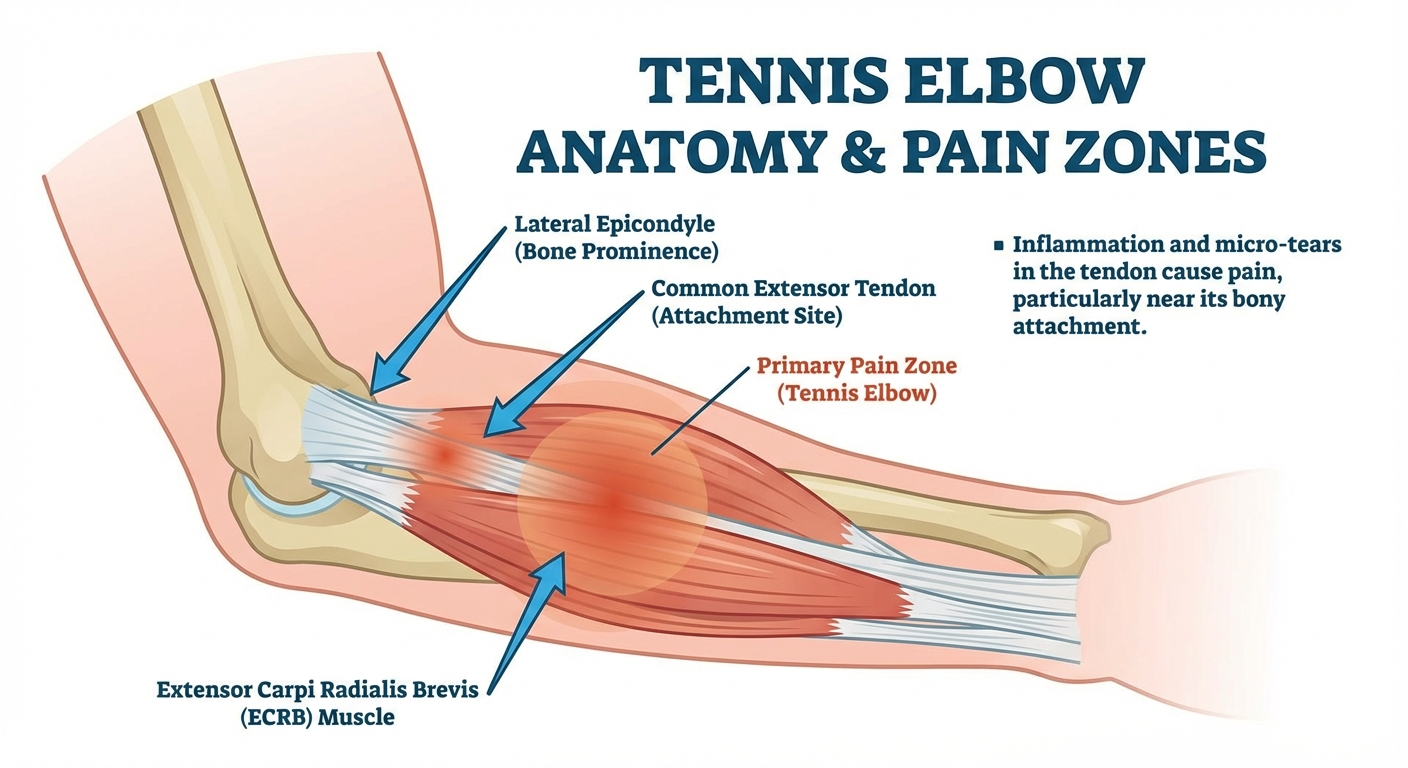
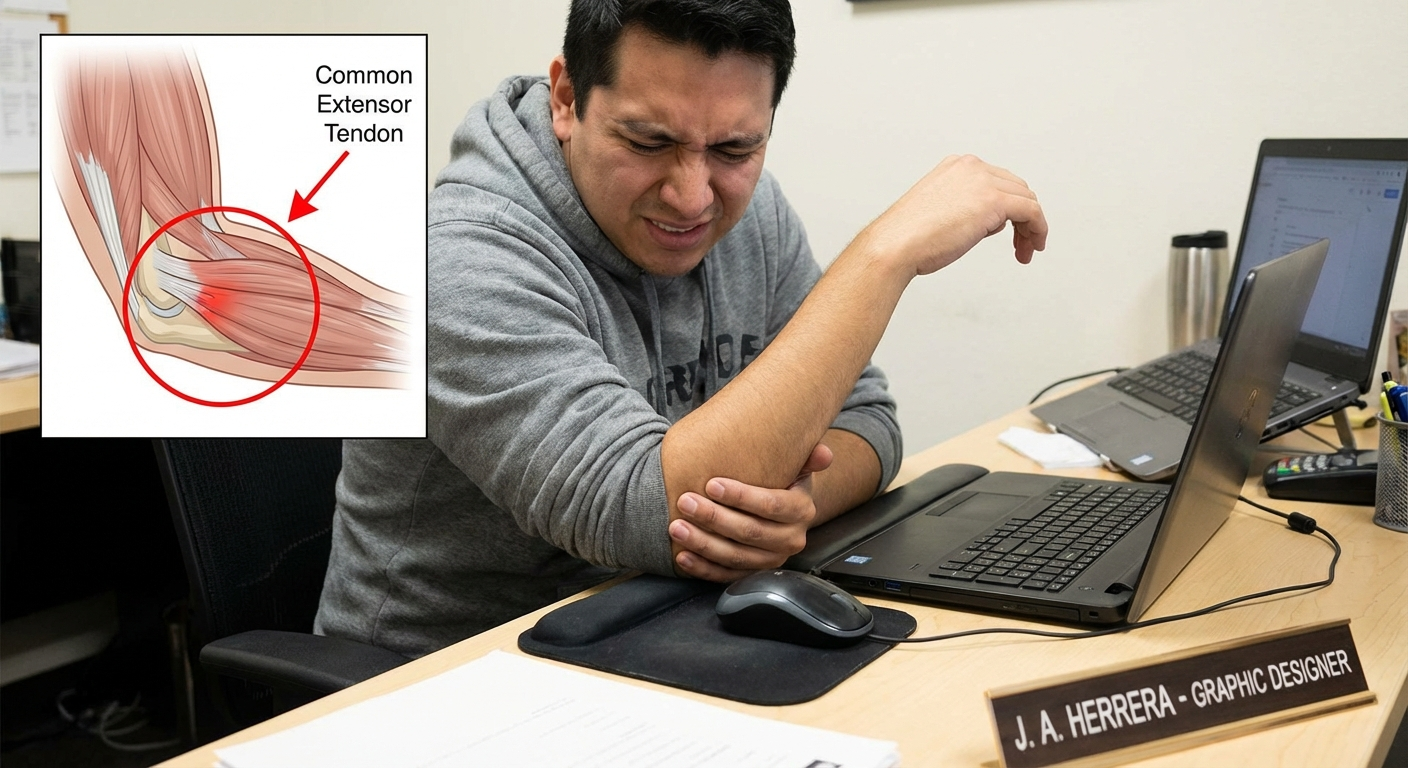
Lateral epicondylitis, commonly known as tennis elbow, is a repetitive strain injury affecting the tendons that attach to the bony bump on the outside of your elbow (the lateral epicondyle). Despite its name, only about 5% of people who develop this condition actually play tennis. The condition strikes anyone who repeatedly grips, twists, or extends their wrist — mechanics, plumbers, office workers, and musicians are all frequent sufferers.
The primary tendon involved is the extensor carpi radialis brevis (ECRB). Micro-tears develop in this tendon when the load placed on it exceeds its capacity to recover. Over time, failed healing leads to a condition called tendinosis — a degenerative process rather than a true inflammatory one. This distinction matters because it explains why tennis elbow exercises focused on tendon remodeling outperform anti-inflammatory approaches in the long run.
According to a 2023 systematic review published in the British Journal of Sports Medicine, approximately 1-3% of the general population experiences lateral epicondylitis each year, with peak incidence between ages 35 and 54. The condition affects men and women equally and typically impacts the dominant arm.
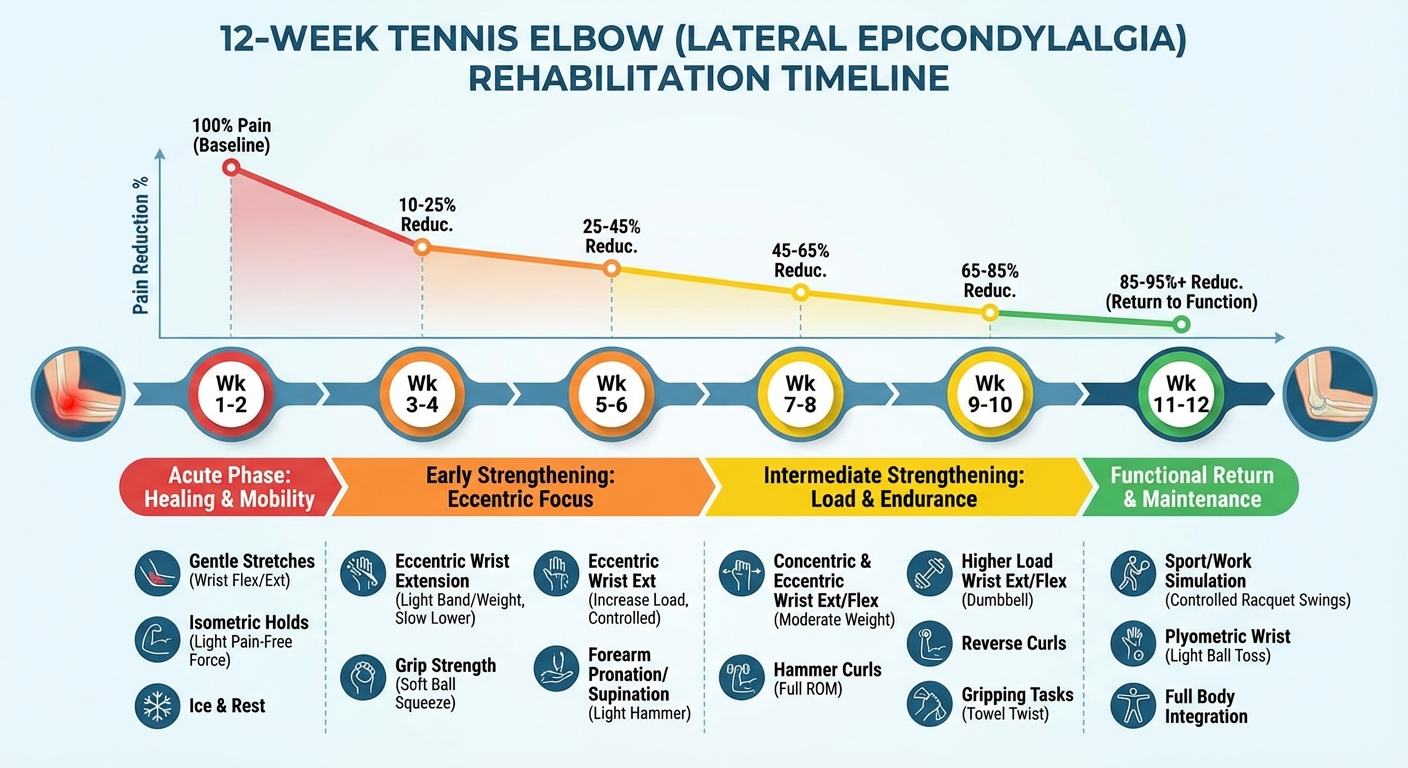
If you are wondering how long does tennis elbow last, the answer depends largely on treatment approach. Without targeted rehab, symptoms can persist for 12 to 24 months. With a structured exercise program, most patients see significant improvement in 6 to 12 weeks.
Why Exercise Beats Rest for Tennis Elbow
Complete rest was once the standard advice for lateral epicondylitis. That guidance is now outdated. A landmark 2005 study by Bisset et al. in the BMJ demonstrated that physiotherapy-based exercise programs produced superior outcomes compared to a wait-and-see approach at both 6-week and 52-week follow-ups.
Here is why targeted tennis elbow exercises work:
- Eccentric loading stimulates collagen realignment within the damaged tendon, converting disorganized scar tissue into functional tissue.
- Progressive stretching restores the tendon's ability to absorb and release elastic energy, reducing re-injury risk.
- Grip and wrist strengthening builds capacity in the surrounding musculature, offloading the vulnerable ECRB tendon.
A 2019 meta-analysis in the Journal of Orthopaedic & Sports Physical Therapy found that eccentric exercise programs reduced pain scores by an average of 81% over 12 weeks. Patients who added isometric holds to their routines experienced immediate analgesic effects, with pain reduction of 28% after a single session.
The takeaway is clear: controlled, progressive loading — not rest — drives tendon healing. The 10 tennis elbow exercises below follow this evidence-based framework.
Exercise Summary Table
| Exercise | Type | Sets/Reps | Difficulty |
|---|---|---|---|
| Eccentric Wrist Extension | Eccentric Loading | 3 x 15 | Beginner |
| Tyler Twist with FlexBar | Eccentric Loading | 3 x 15 | Intermediate |
| Wrist Extensor Stretch | Stretch | 3 x 30 sec | Beginner |
| Wrist Flexor Stretch | Stretch | 3 x 30 sec | Beginner |
| Forearm Pronation/Supination | Strengthening | 3 x 10 each | Beginner |
| Ball Squeeze Strengthening | Strengthening | 3 x 10 (5 sec hold) | Beginner |
| Towel Wring Exercise | Strengthening | 3 x 10 each direction | Intermediate |
| Finger Extension with Rubber Band | Strengthening | 3 x 15 | Beginner |
| Radial Deviation with Dumbbell | Strengthening | 3 x 12 | Intermediate |
| Eccentric Wrist Curl with Band | Eccentric Loading | 3 x 15 | Advanced |
Perform these tennis elbow exercises once daily during the acute phase (weeks 1-4), then progress to twice daily during the strengthening phase (weeks 5-12). Mild discomfort during exercise is acceptable — sharp or worsening pain is not.
10 Tennis Elbow Exercises for Fast Recovery
1. Eccentric Wrist Extension
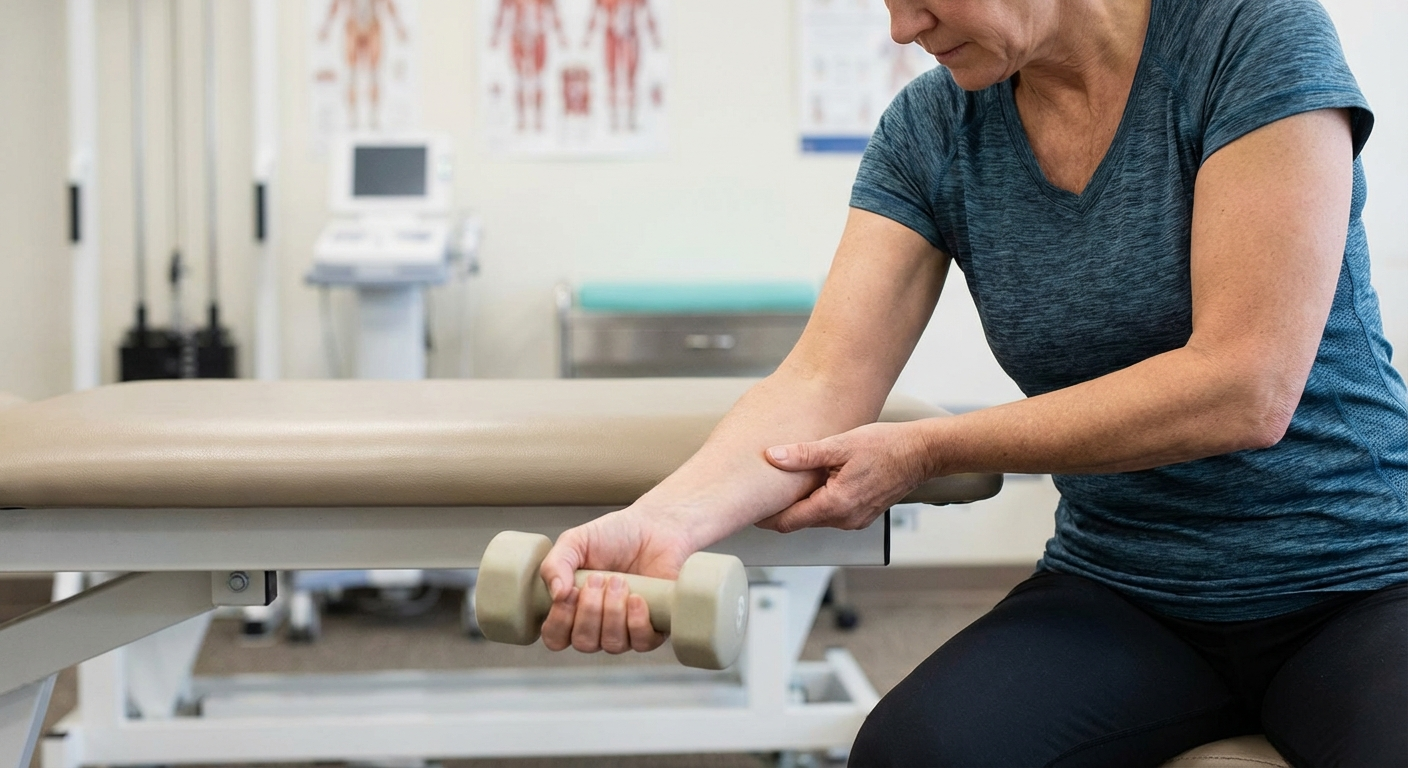
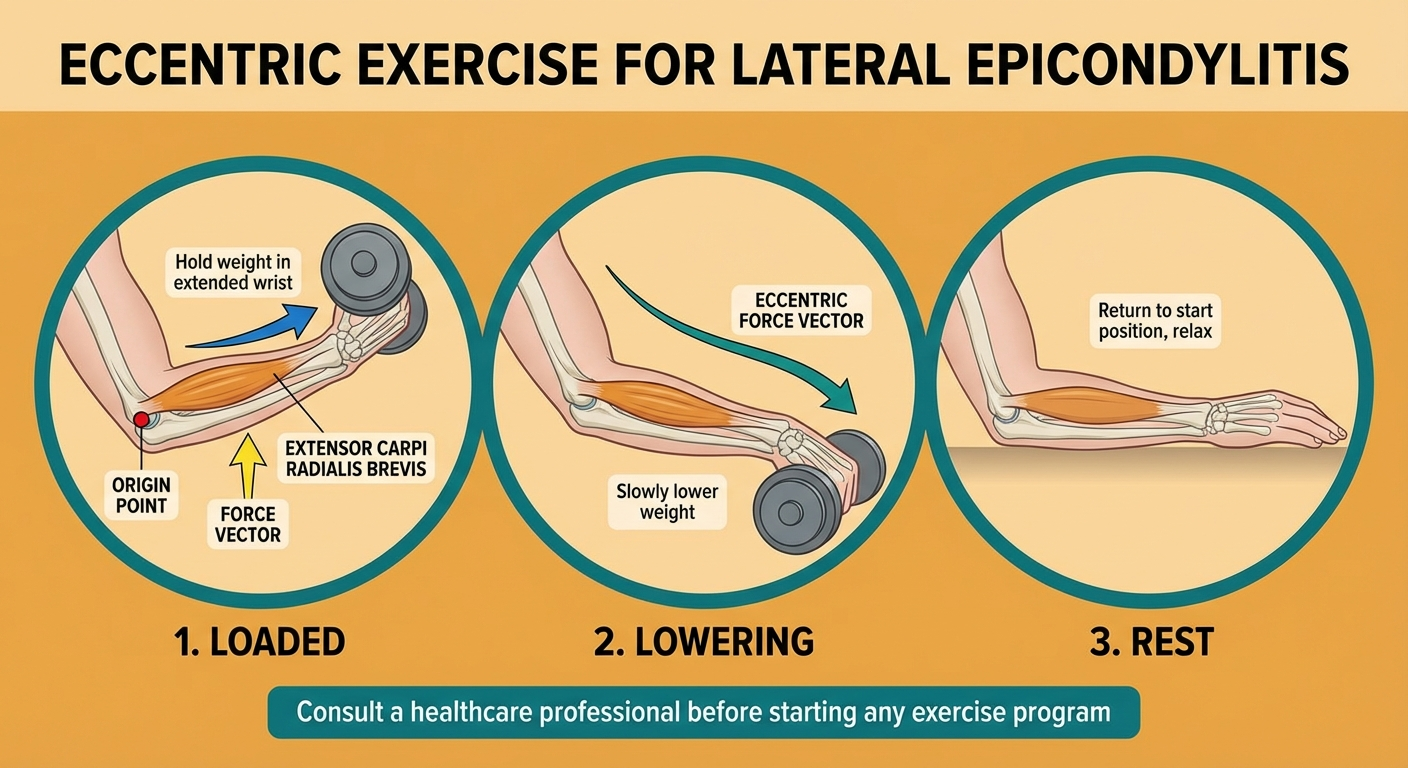
Type: Eccentric Loading Equipment: 1-3 lb dumbbell Why it works: Eccentric wrist extension is the gold standard tennis elbow exercise. A 2009 study in the British Journal of Sports Medicine demonstrated that eccentric-only training produced a 72% improvement in pain scores over 8 weeks. The slow lowering phase forces the damaged ECRB tendon to lengthen under load, triggering structural remodeling.
Step-by-step instructions:
- Sit in a chair and rest your affected forearm on a table or your thigh, palm facing down, with your wrist hanging over the edge.
- Hold a light dumbbell (1-2 lbs to start) in your affected hand.
- Use your unaffected hand to lift the dumbbell by extending the wrist upward to full extension.
- Release the helping hand.
- Slowly lower the dumbbell by flexing the wrist downward over a count of 5 seconds.
- Return to the start position using the helping hand. Do not use the affected arm to lift.
- Complete 3 sets of 15 repetitions.
Progression: Increase dumbbell weight by 1 lb every 2 weeks as pain allows. When you can complete 3 x 15 at 5 lbs without pain, you are ready to advance to the Tyler Twist.
2. Tyler Twist with FlexBar
Type: Eccentric Loading Equipment: TheraBand FlexBar (red or green) Why it works: The Tyler Twist protocol, developed by Dr. Timothy Tyler at the Nicholas Institute of Sports Medicine, has strong clinical backing. A 2010 randomized controlled trial published in the Journal of Hand Therapy showed an 81% improvement in pain and a 72% improvement in strength after just 8 weeks.
Step-by-step instructions:
- Hold the FlexBar vertically in front of you. Grip the bottom end with your affected hand, wrist extended (bent back).
- Grip the top end of the FlexBar with your unaffected hand.
- Twist the bar by flexing the unaffected wrist forward while holding the affected wrist steady.
- Bring both arms out in front of you, elbows straight, maintaining the twist in the bar.
- Slowly allow the affected wrist to flex (bend forward), releasing the stored twist over a 3-5 second count.
- Return to start position and repeat.
- Complete 3 sets of 15 repetitions.
Progression: Move from the red FlexBar (light resistance) to the green (medium) after 3 weeks, and to the blue (heavy) when 3 x 15 on green is pain-free.
Shop Tennis Elbow Recovery Gear on Amazon
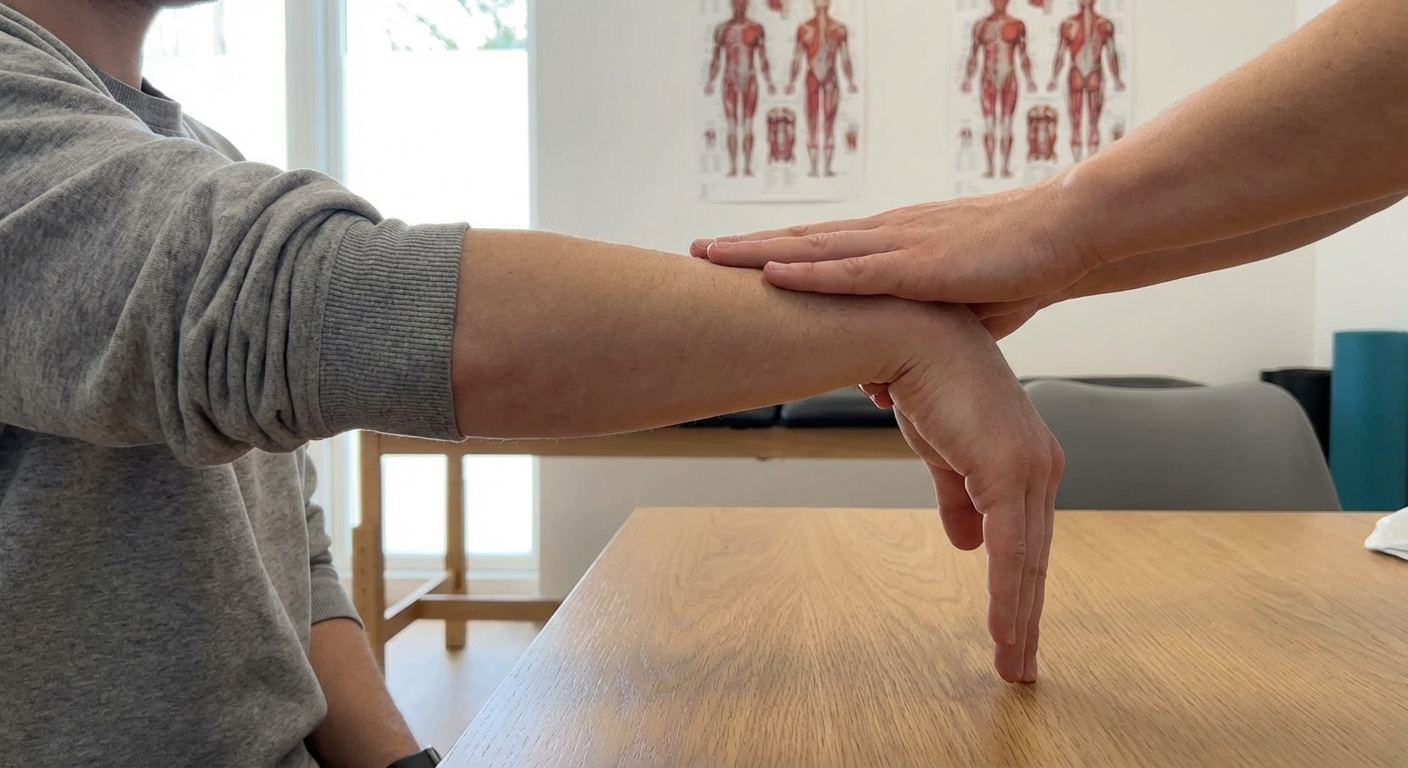
3. Wrist Extensor Stretch
Type: Stretch Equipment: None Why it works: Tight wrist extensors increase mechanical stress on the lateral epicondyle. This stretch targets the extensor carpi radialis longus and brevis, improving their flexibility and reducing traction forces on the tendon insertion point.
Step-by-step instructions:
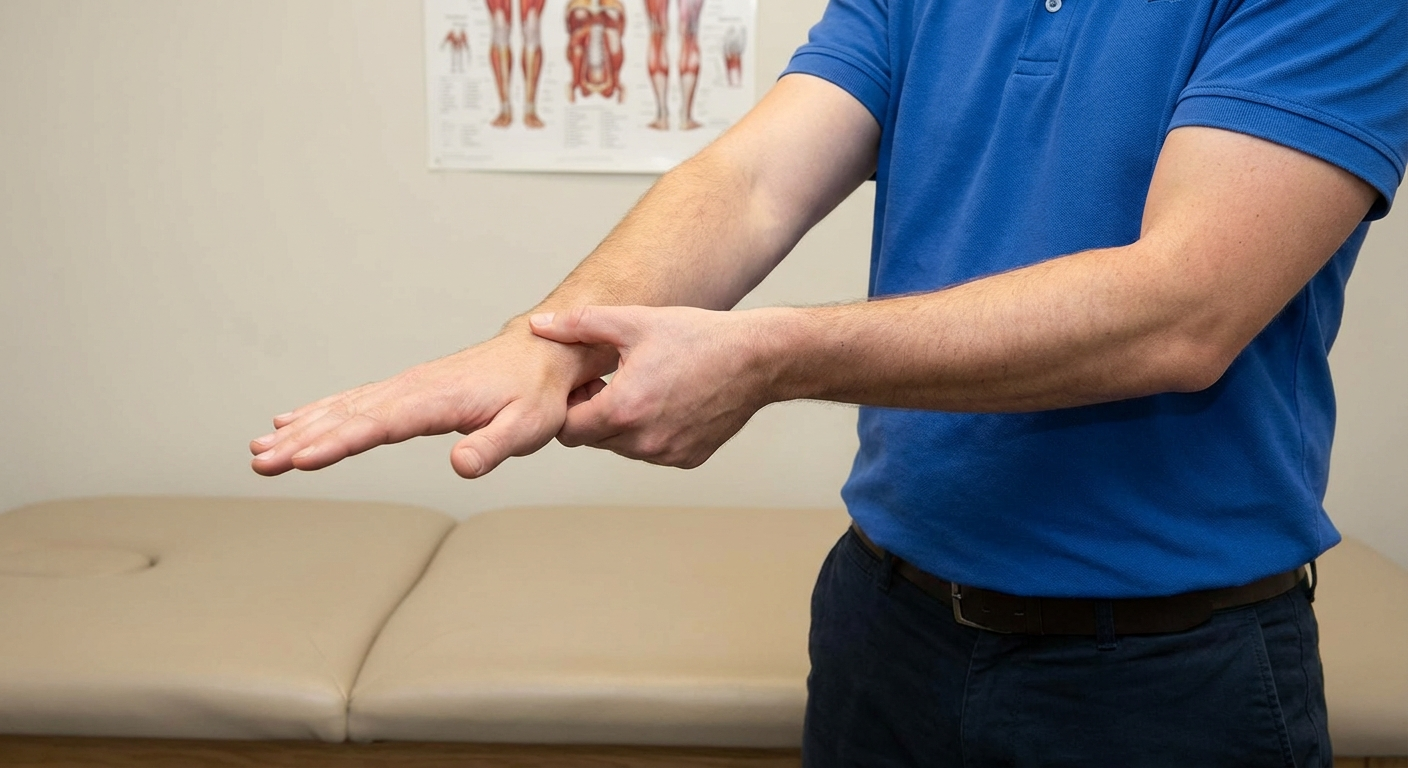
- Extend your affected arm straight out in front of you, palm facing down.
- Use your opposite hand to gently press the back of the affected hand downward, flexing the wrist.
- Keep the elbow completely straight throughout the stretch.
- You should feel a gentle pulling sensation along the top of your forearm.
- Hold for 30 seconds.
- Release slowly and repeat 3 times.
Tip: Perform this stretch before and after each session of tennis elbow exercises for best results. If you use a best tennis elbow brace, remove it before stretching to allow full range of motion.
4. Wrist Flexor Stretch
Type: Stretch Equipment: None Why it works: Although tennis elbow primarily affects the extensors, tight flexors create muscle imbalances that increase lateral elbow stress. Stretching the wrist flexors restores balanced forearm mechanics and complements the extensor-focused work.
Step-by-step instructions:
- Extend your affected arm straight in front of you, palm facing up.
- Use your opposite hand to gently press your fingers downward, extending the wrist.
- Keep your elbow locked in full extension.
- Hold the stretch for 30 seconds. You should feel the stretch along the underside of your forearm.
- Release and repeat 3 times.
Tip: Pair this with the wrist extensor stretch as a warm-up and cooldown for all other exercises.
5. Forearm Pronation and Supination
Type: Strengthening Equipment: Hammer or weighted object (1-2 lbs) Why it works: The forearm pronators and supinators work alongside the wrist extensors during gripping and twisting motions. Strengthening these muscles builds a broader support network around the elbow, reducing the workload on the injured ECRB tendon.
Step-by-step instructions:
- Sit with your forearm resting on a table, elbow bent at 90 degrees.
- Hold a hammer or similar weighted object at its end, so the weight extends above and below your hand.
- Slowly rotate your forearm so your palm faces down (pronation). Take 3 seconds.
- Pause for 1 second.
- Slowly rotate your forearm so your palm faces up (supination). Take 3 seconds.
- Complete 3 sets of 10 repetitions in each direction.
Progression: Grip the hammer closer to the head to increase the lever arm and resistance.
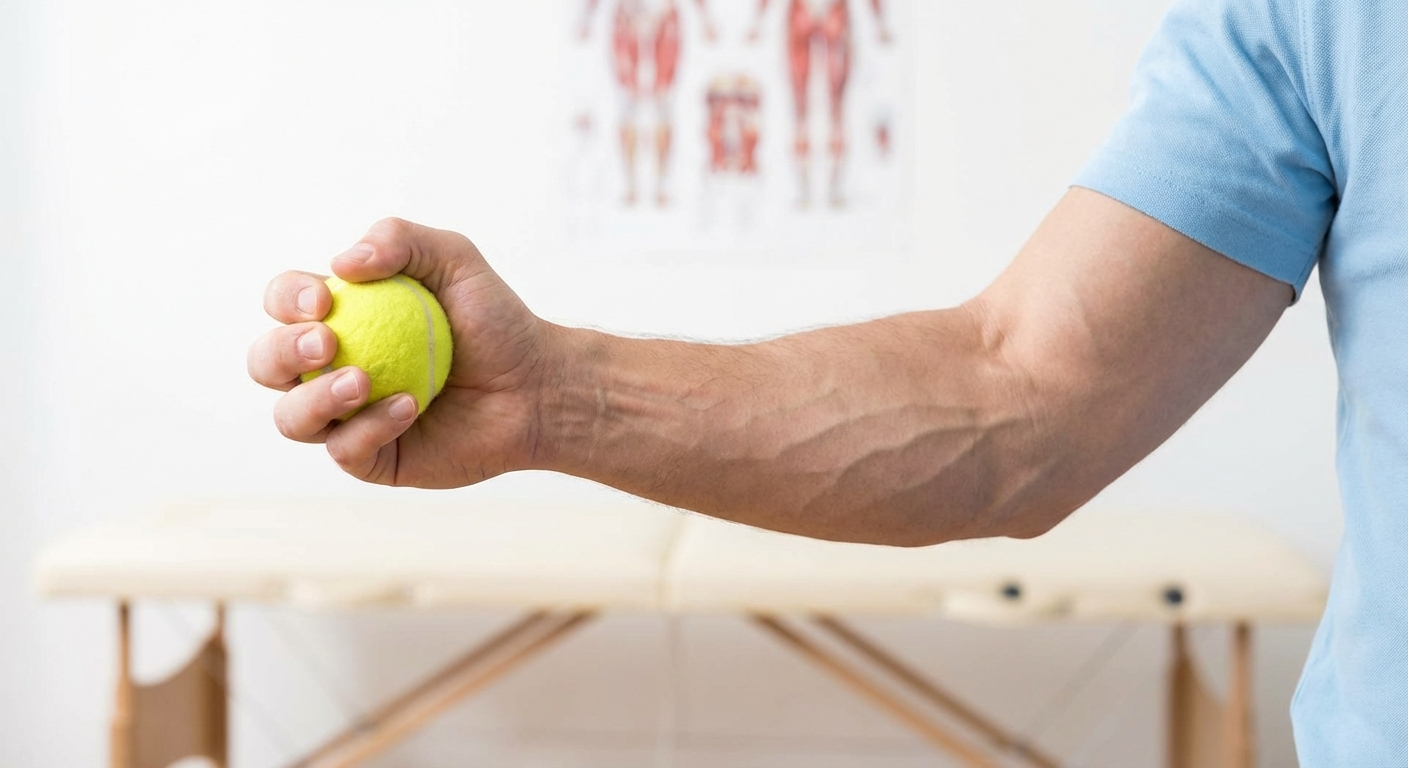
6. Ball Squeeze Strengthening
Type: Strengthening Equipment: Tennis ball or therapy putty Why it works: Grip strength is one of the first functional abilities lost with tennis elbow, and its restoration is a key marker of recovery. Isometric squeezing at sub-maximal intensity provides pain-modulating effects while gradually rebuilding grip endurance.
Step-by-step instructions:
- Hold a tennis ball or medium-resistance therapy putty in your affected hand.
- Squeeze firmly but not at maximum effort — aim for about 60-70% of your pain-free maximum.
- Hold the squeeze for 5 seconds.
- Release slowly over 2 seconds.
- Rest for 3 seconds between repetitions.
- Complete 3 sets of 10 repetitions.
Progression: Progress from a tennis ball to firmer therapy putty as strength improves. If you find the exercise too easy, switch to a hand grip strengthener with adjustable resistance.
Wearing a best tennis elbow brace during gripping exercises can reduce strain on the lateral epicondyle and allow you to work with slightly higher loads.
7. Towel Wring Exercise
Type: Strengthening Equipment: Small towel Why it works: Towel wringing mimics the combined gripping and twisting pattern that aggravates tennis elbow. Training this movement pattern at controlled intensity builds functional resilience and prepares the tendon for real-world demands like opening jars, turning doorknobs, and gripping tools.
Step-by-step instructions:
- Roll a small towel lengthwise. Hold one end in each hand.
- Keep both elbows close to your body, bent at 90 degrees.
- Wring the towel as if you are squeezing water out of it, twisting in one direction.
- Hold the end position for 2 seconds.
- Slowly release and wring in the opposite direction.
- Complete 3 sets of 10 wrings in each direction.
Tip: Start with a dry towel. Once you can complete 3 x 10 without pain, soak the towel in water for added resistance.
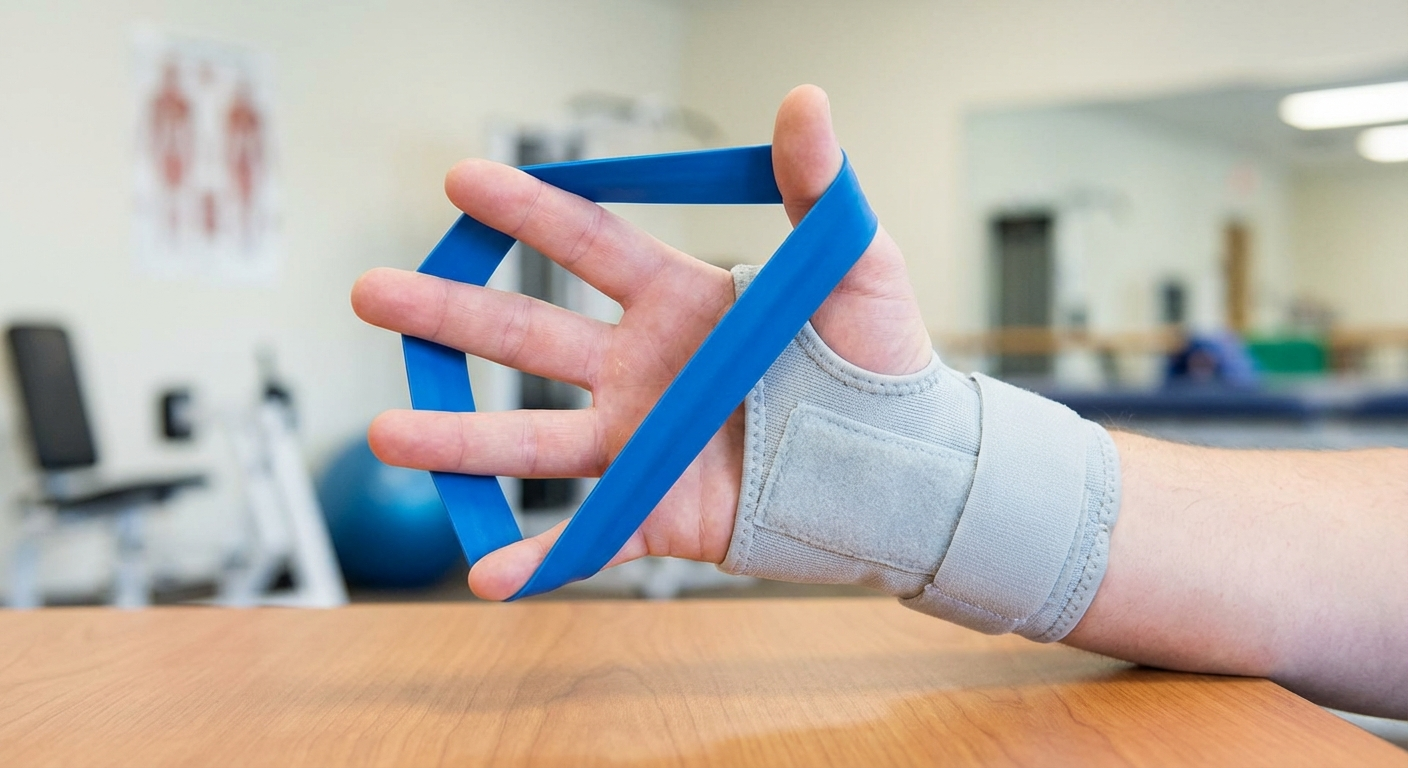
8. Finger Extension with Rubber Band
Type: Strengthening Equipment: Thick rubber band Why it works: The finger extensors share the common extensor tendon with the wrist extensors. Strengthening the finger extensors distributes load more evenly across the tendon complex and addresses a commonly overlooked contributor to lateral elbow pain.
Step-by-step instructions:
- Place a thick rubber band around all five fingertips of your affected hand.
- Spread your fingers apart against the resistance of the band as wide as possible.
- Hold the open position for 2 seconds.
- Slowly bring your fingers back together over 3 seconds.
- Complete 3 sets of 15 repetitions.
Progression: Double up the rubber band or use a thicker band to increase resistance. You can also purchase dedicated finger extension trainers for more precise resistance control.
9. Radial Deviation with Dumbbell
Type: Strengthening Equipment: 2-5 lb dumbbell Why it works: Radial deviation strengthens the brachioradialis and extensor carpi radialis longus — two muscles that stabilize the wrist during gripping and support the vulnerable ECRB tendon. This exercise addresses a frequently neglected movement plane in tennis elbow rehabilitation.
Step-by-step instructions:
- Stand or sit upright. Hold a light dumbbell in your affected hand with your arm at your side, thumb facing forward (hammer grip).
- Keep your elbow straight and your forearm still.
- Slowly bend your wrist upward (toward the thumb side). This is radial deviation.
- Hold at the top for 1 second.
- Lower slowly over 3 seconds.
- Complete 3 sets of 12 repetitions.
Progression: Increase dumbbell weight by 1 lb every 2-3 weeks. When how long does tennis elbow last is your primary concern, consistent progression through exercises like this one is what shortens the timeline.
10. Eccentric Wrist Curl with Resistance Band
Type: Eccentric Loading Equipment: Resistance band (light to medium) Why it works: This advanced eccentric exercise adds variable resistance throughout the range of motion. The band provides increasing load as the tendon lengthens, which maximizes the eccentric stimulus and accelerates collagen realignment in the later stages of rehab.
Step-by-step instructions:
- Secure one end of a resistance band under your foot.
- Sit with your affected forearm resting on your thigh, palm facing down, wrist over the edge of your knee.
- Grip the other end of the band with your affected hand.
- Use your unaffected hand to assist your wrist into full extension (bent back).
- Release the helping hand and slowly lower your wrist into flexion (bent forward) over a count of 5 seconds, controlling the band's pull.
- Assist back to the start position with your unaffected hand.
- Complete 3 sets of 15 repetitions.
Progression: Use a thicker band or shorten the band length to increase resistance. This exercise should only be introduced after 4-6 weeks of the basic eccentric wrist extension exercise.
Shop Tennis Elbow Recovery Gear on Amazon
What to Avoid During Recovery
Knowing what not to do is just as important as following the right tennis elbow exercises. These common mistakes delay healing and can turn a 6-week problem into a 6-month ordeal.
Avoid complete rest. While reducing aggravating activities makes sense, total immobilization causes tendon deconditioning and prolongs recovery. Controlled loading through the exercises above is essential for tendon remodeling.
Avoid heavy gripping and lifting. Activities like carrying heavy grocery bags, using a manual screwdriver, or performing barbell rows place excessive strain on the healing tendon. Modify these tasks — use both hands, switch to electric tools, or reduce loads.
Avoid repetitive wrist extension against resistance. Backhand tennis shots, aggressive typing with raised wrists, and certain weight training movements (reverse curls, rows with overextended wrists) replicate the exact loading pattern that caused the injury.
Avoid cortisone injections as a first-line treatment. While corticosteroid injections provide short-term pain relief, a 2013 Lancet study by Coombes et al. showed that injection groups had significantly worse outcomes at 12 months compared to exercise-only groups. Injections may impair tendon healing and increase recurrence rates.
Avoid pushing through sharp pain. A mild ache (3-4 out of 10) during tennis elbow exercises is acceptable and even expected. Sharp, stabbing pain or pain that worsens during an exercise session signals that you are exceeding your tendon's current capacity. Reduce load and consult a physiotherapist.
Avoid ignoring ergonomic factors. If your tennis elbow stems from workplace activities, continuing those activities without modification guarantees re-injury. Evaluate your desk setup, tool handles, and movement patterns. Using a best tennis elbow brace during unavoidable aggravating tasks can provide meaningful offloading.
Heat vs. Ice: When to Use Each
The heat-versus-ice debate generates confusion, but the answer is straightforward when you understand the underlying tissue physiology.
Use ice during the first 2-4 weeks (acute/reactive phase). Apply a cold pack wrapped in a thin cloth to the lateral elbow for 15-20 minutes after performing your tennis elbow exercises. Ice constricts blood vessels, reduces metabolic activity in the stressed tissue, and provides analgesic effects. Apply 2-3 times daily and always after exercise sessions.
Switch to heat after week 4 (remodeling phase). Once the acute reactivity settles, heat promotes blood flow to the tendon, delivering oxygen and nutrients essential for collagen synthesis. Apply a warm pack for 10-15 minutes before your exercise session to improve tissue extensibility and reduce stiffness.
The combined approach. Many physiotherapists recommend contrast therapy — alternating 3 minutes of heat with 1 minute of cold for 15-20 minutes total. This creates a pumping effect in the local vasculature that may accelerate waste removal and nutrient delivery. Research on contrast therapy for tendinopathy is limited but promising.
A key statistic: a 2020 study in the Journal of Athletic Training found that cryotherapy applied within 10 minutes of eccentric exercise reduced post-exercise pain by 34% compared to no ice application. Timing matters.
Supporting Your Recovery with the Right Gear
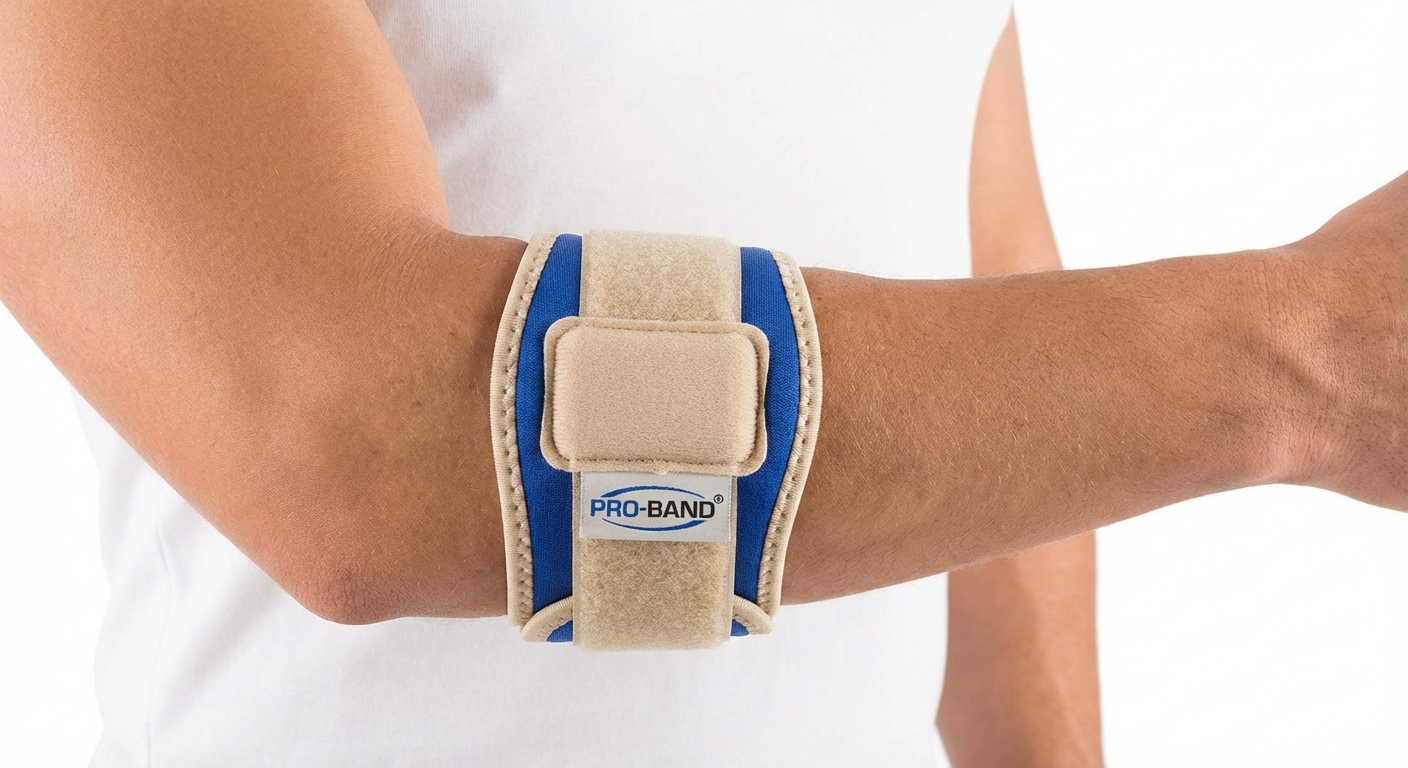
The right equipment makes a measurable difference in tennis elbow recovery. A counterforce brace distributes load away from the damaged tendon during daily activities, while exercise-specific tools like FlexBars and therapy putty provide the precise resistance needed for progressive rehab.
If you have not already, explore the best tennis elbow brace options to find one that fits your forearm circumference and activity level. A well-fitted brace can reduce tendon strain by up to 15% during gripping tasks.
For your exercise program, the following equipment covers all 10 exercises listed above:
- TheraBand FlexBar (red, green, and blue for progressive resistance)
- Light dumbbells (1-5 lbs, adjustable set preferred)
- Resistance bands (light and medium)
- Therapy putty (medium and firm)
Shop Tennis Elbow Recovery Gear on Amazon
If you are still asking how long does tennis elbow last, the most honest answer is that consistency with these exercises — not passive treatments — determines your recovery timeline. Most patients who follow a structured program see 50% improvement by week 6 and near-complete resolution by week 12.
FAQ
How many times a day should I do tennis elbow exercises? During the first four weeks, perform the exercises once daily to allow the tendon time to adapt. From week five onward, increase to twice daily. Each session should last approximately 15-20 minutes. Always allow at least 6 hours between sessions to avoid overloading the healing tendon.
Can I still play tennis while doing these exercises? You should reduce or temporarily stop playing tennis during the first 4-6 weeks of rehabilitation. Once you can perform all 10 exercises without significant pain, you can gradually reintroduce tennis starting with gentle rallies and avoiding aggressive backhands. Wearing a best tennis elbow brace during play provides additional protection during return-to-sport.
What is the single most effective exercise for tennis elbow? The eccentric wrist extension exercise has the strongest research backing for tennis elbow recovery. Multiple randomized controlled trials demonstrate that eccentric-only loading programs reduce pain by 72-81% over 8-12 weeks. The Tyler Twist with a FlexBar is a close second and may be more practical for daily use.
Should I exercise if my tennis elbow is still painful? Mild discomfort rated 3-4 out of 10 during exercise is acceptable and does not indicate harm. This is sometimes called "acceptable pain" in rehabilitation science. However, pain that exceeds 5 out of 10 or worsens as you continue the exercise means you should reduce the resistance or number of repetitions. Sharp pain is always a signal to stop.
Do I need to see a physiotherapist or can I do these exercises at home? Most people with mild to moderate tennis elbow can successfully follow a home exercise program like the one described in this article. However, you should consult a physiotherapist if your symptoms have persisted for more than 3 months, if you are unsure about correct exercise technique, or if pain is worsening despite consistent exercise. A physiotherapist can also add manual therapy techniques and dry needling that complement the exercise program.
When should I consider surgery for tennis elbow? Surgery is typically reserved for cases that fail to respond to 6-12 months of structured conservative treatment, including a progressive exercise program. Only about 4-11% of lateral epicondylitis patients ultimately require surgery. The most common procedure is arthroscopic debridement of the damaged ECRB tendon, which has success rates of 85-90%.
Sources
-
Bisset, L., Beller, E., Jull, G., Brooks, P., Darnell, R., & Vicenzino, B. (2006). Mobilisation with movement and exercise, corticosteroid injection, or wait and see for tennis elbow: randomised trial. BMJ, 333(7575), 939. doi:10.1136/bmj.38961.584653.AE
-
Tyler, T. F., Thomas, G. C., Nicholas, S. J., & McHugh, M. P. (2010). Addition of isolated wrist extensor eccentric exercise to standard treatment for chronic lateral epicondylosis: A prospective randomized trial. Journal of Hand Therapy, 23(3), 261-270. doi:10.1016/j.jht.2010.01.002
-
Coombes, B. K., Bisset, L., Brooks, P., Khan, A., & Vicenzino, B. (2013). Effect of corticosteroid injection, physiotherapy, or both on clinical outcomes in patients with unilateral lateral epicondylalgia: a randomized controlled trial. JAMA, 309(5), 461-469. doi:10.1001/jama.2013.129
-
Stasinopoulos, D., & Stasinopoulos, I. (2017). Comparison of effects of eccentric training, eccentric-concentric training, and eccentric-concentric training combined with isometric contraction in the treatment of lateral elbow tendinopathy. Journal of Hand Therapy, 30(1), 13-19. doi:10.1016/j.jht.2016.09.001
-
Cullinane, F. L., Boocock, M. G., & Trevelyan, F. C. (2014). Is eccentric exercise an effective treatment for lateral epicondylitis? A systematic review. Clinical Rehabilitation, 28(1), 3-19. doi:10.1177/0269215513491974
-
Vicenzino, B. (2003). Lateral epicondylalgia: a musculoskeletal physiotherapy perspective. Manual Therapy, 8(2), 66-79. doi:10.1016/S1356-689X(02)00157-1
-
Pienimaki, T., Tarvainen, T. K., Siira, P. T., & Vanharanta, H. (1996). Progressive strengthening and stretching exercises and ultrasound for chronic lateral epicondylitis. Physiotherapy, 82(9), 522-530. doi:10.1016/S0031-9406(05)66275-X
-
Ma, K. L., & Wang, H. Q. (2020). Management of lateral epicondylitis: A narrative literature review. Pain Research and Management, 2020, 6965381. doi:10.1155/2020/6965381