TMJ Guide
Can You Play Tennis with Tennis Elbow? A Sports Medicine Guide (2026)
Can you play tennis with tennis elbow? Sports medicine physician explains when it is safe to play, technique modifications, bracing strategies, and a step-by-step return-to-play protocol.
By Dr. Ryan Brooks, Sports Medicine Physician · Published 2026-03-31 · Updated 2026-03-31
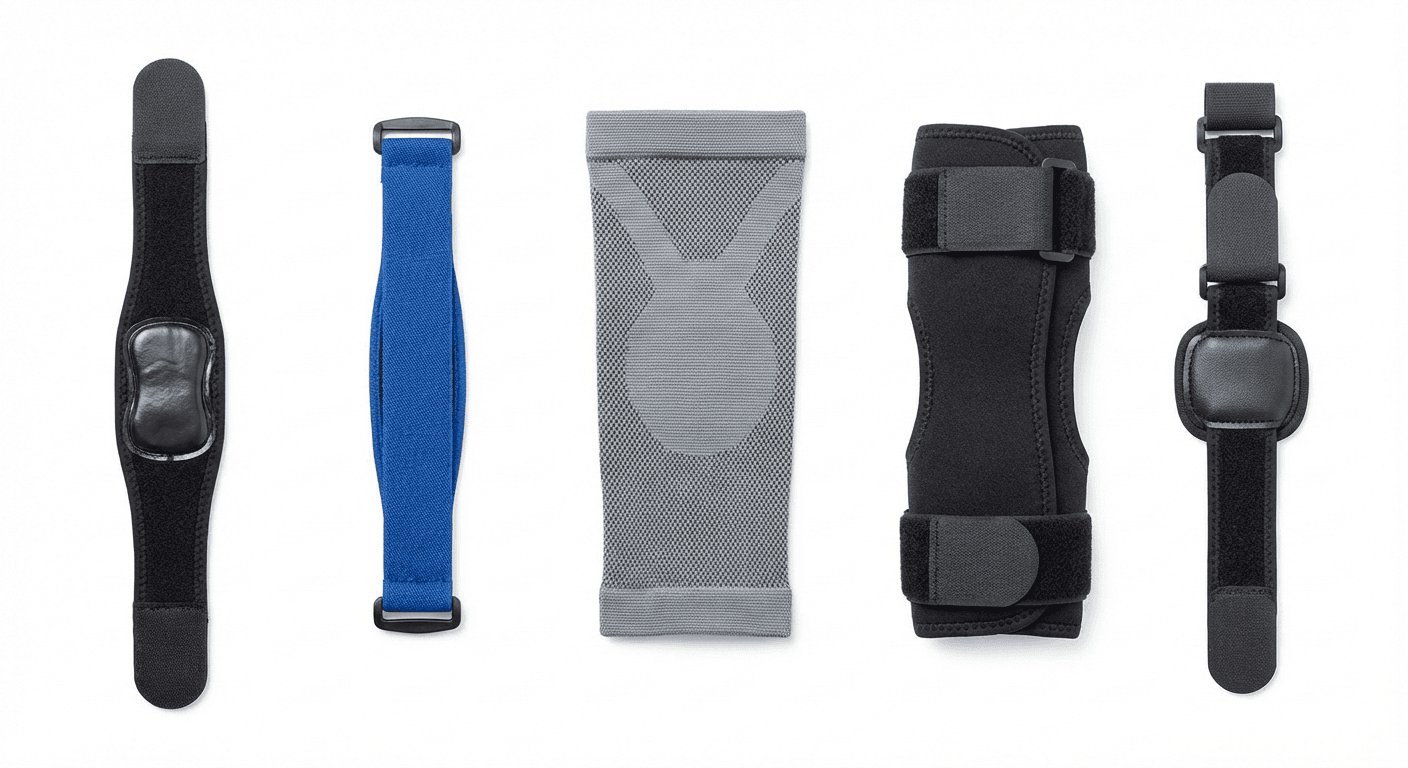
Yes, you can play tennis with tennis elbow — but only if your pain is 3/10 or lower during daily activities, your grip strength is at least 80% of your unaffected side, and you follow a structured return-to-play protocol that includes technique modifications, proper bracing, and session time limits. Playing through significant pain risks converting a 6-week recovery into a 6-month chronic condition.
By Dr. Ryan Brooks, Sports Medicine Physician | Last updated March 2026
 Hero visual for this section
Table of Contents
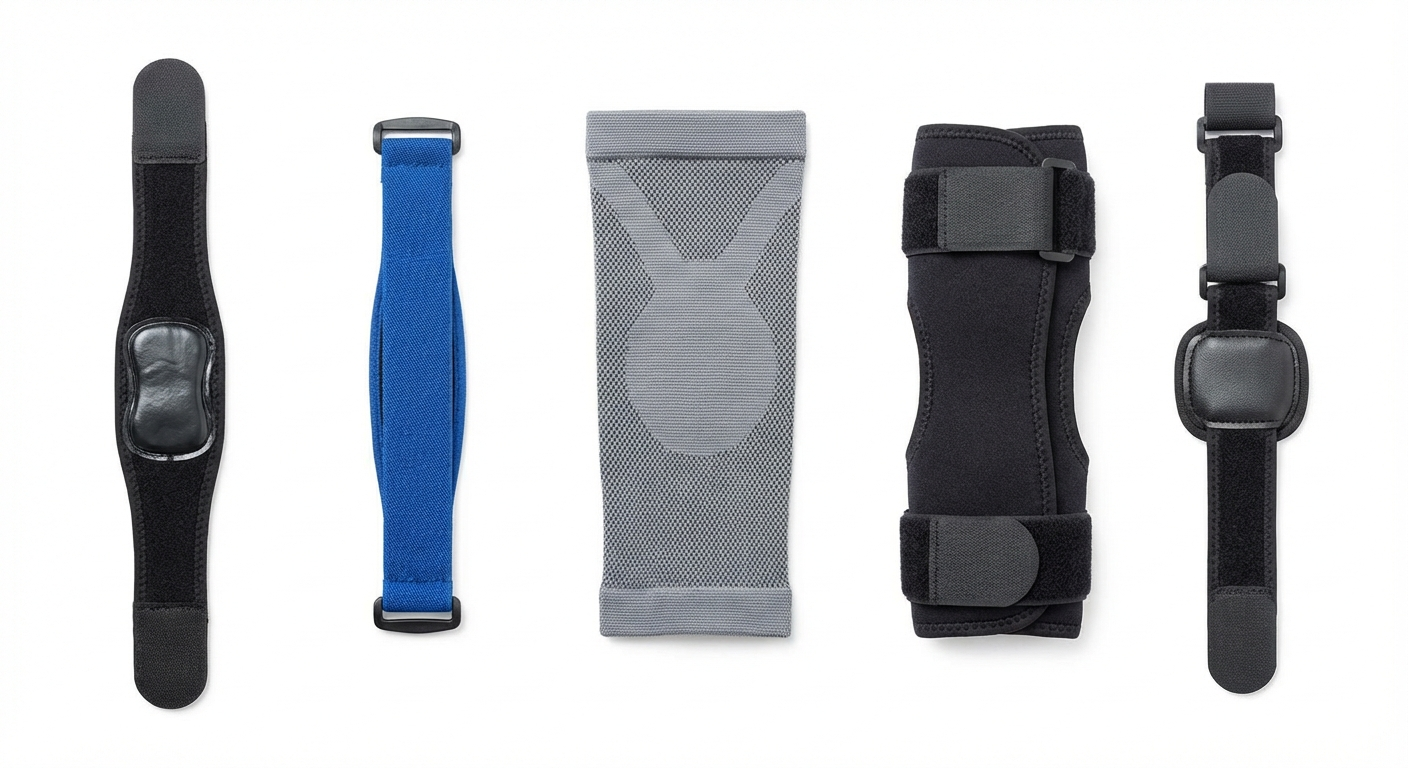
 Comparison visual for Table of Contents
- Understanding Tennis Elbow in Tennis Players
- When Is It Safe to Play? The Pain Assessment Framework
- Technique Modifications That Protect Your Elbow
- Equipment Changes That Reduce Elbow Strain
- The 7-Week Return-to-Play Protocol
- Best Products for Playing Tennis with Tennis Elbow
- Video: Return-to-Play Guide
- Pre-Match and Post-Match Routines
- When to Stop Playing and See a Doctor
- FAQ
- Sources
Understanding Tennis Elbow in Tennis Players
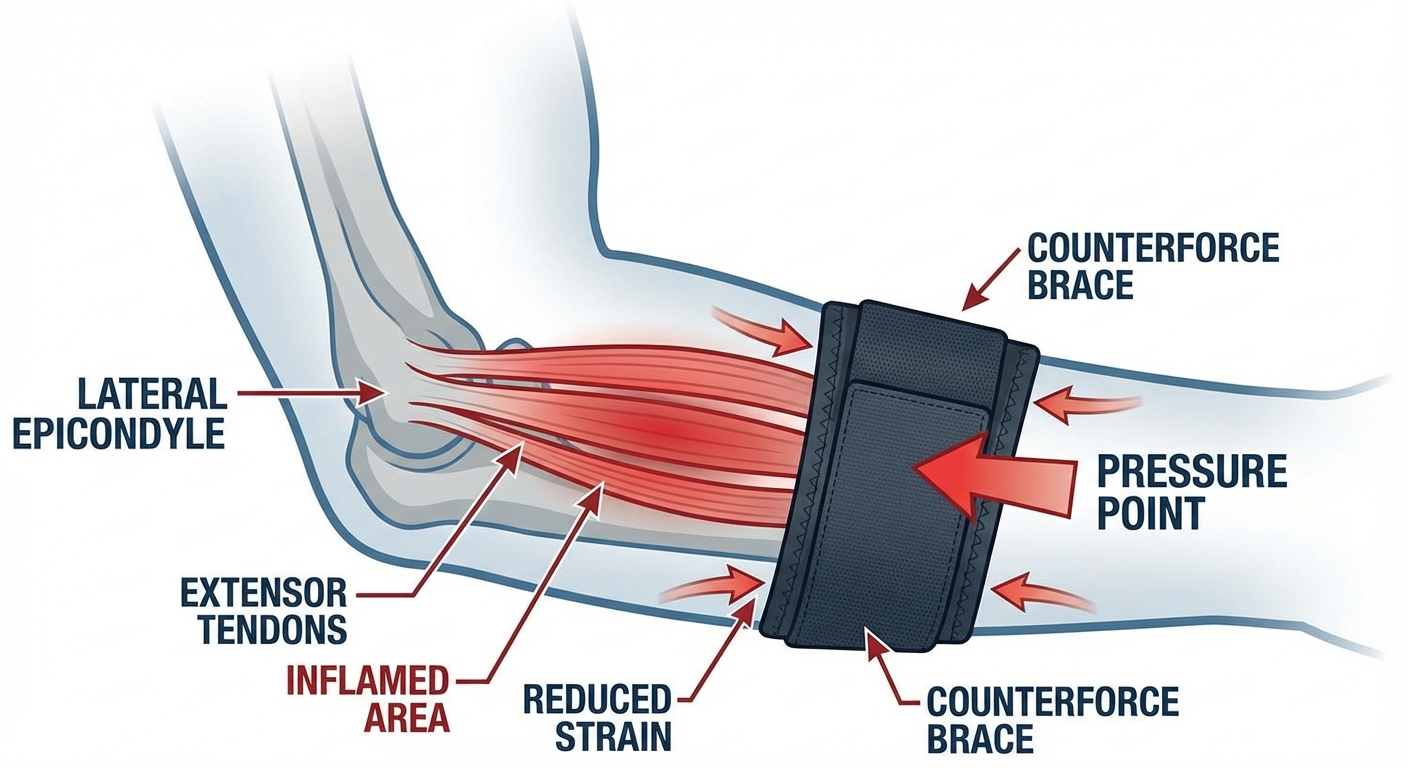 *Infographic visual for Understanding Tennis Elbow in Tennis Players *
Tennis elbow — lateral epicondylitis — is the most common overuse injury in racquet sports, affecting 40–50% of recreational tennis players at some point during their playing careers. The condition involves degeneration and microtearing of the extensor carpi radialis brevis (ECRB) tendon where it anchors to the lateral epicondyle, the bony prominence on the outside of your elbow. Every time you grip your racquet, swing through the ball, or absorb impact vibration, these damaged tendon fibers bear loads they are no longer equipped to handle.
The question "can I still play?" is the single most common inquiry I receive from tennis players with lateral epicondylitis. The answer is not a simple yes or no — it depends on your pain level, your tendon's current structural integrity, and your willingness to modify both your technique and your training volume.
What makes tennis particularly problematic for lateral epicondylitis is the repetitive nature of the sport. A typical recreational match involves 300–500 ball impacts over 60–90 minutes. Each impact transmits vibration through the racquet frame, into the grip, and directly into the forearm extensor muscles. The one-handed backhand is the single most stressful stroke for the lateral epicondyle — biomechanical studies show it generates 3–5 times more eccentric load on the ECRB tendon than a forehand stroke.
The critical distinction that determines whether playing is safe is the difference between tendon irritation and tendon degeneration. Mild irritation — where the tendon is inflamed but structurally intact — responds well to modified activity and can tolerate controlled loading. Advanced degeneration — where the tendon shows disorganized collagen fibers, neovascularization, and partial tearing on ultrasound — requires more aggressive rest and rehabilitation before any return to sport.
If you are currently working through a structured rehabilitation program, combining your playing schedule with daily exercises for tennis elbow recovery is essential for building tendon resilience alongside match play.
When Is It Safe to Play? The Pain Assessment Framework
 *Setup visual for When Is It Safe to Play? The Pain Assessment Framework *
Before you step on court, you need an objective way to assess whether your elbow can handle the session. I use a traffic-light pain assessment framework with my patients that provides clear, actionable decision-making criteria.
Green Zone: 0–3/10 Pain — Safe to Play with Modifications
If your pain during normal daily activities (gripping a coffee cup, turning a doorknob, shaking hands) sits at 3 or below on a 0–10 visual analog scale, you can proceed with modified tennis play. You must also meet two additional criteria:
- Grip strength test: Squeeze a hand dynamometer or a rolled towel as hard as you can with your affected arm. Compare the result to your uninjured side. You need at least 80% grip strength to play safely.
- Wall rally test: Hit a ball against a practice wall for 15 minutes at moderate pace. If you complete the 15 minutes without pain increasing above 3/10, you are cleared for modified match play.
Yellow Zone: 4–6/10 Pain — No Match Play, Rehabilitation Only
Pain in this range indicates the tendon is still significantly irritated and cannot safely handle the repetitive impact loading of competitive play. You should focus on:
- Structured eccentric strengthening exercises
- Forearm stretches for tennis elbow before and after any physical activity
- Light, controlled hitting drills (wall rallies only, 10 minutes maximum)
- Wearing a counterforce brace during all activities
Red Zone: 7–10/10 Pain — Complete Rest from Tennis
If pain exceeds 6/10 during daily activities, you should not be hitting tennis balls in any capacity. This level of pain suggests active tendon inflammation or structural compromise. Focus exclusively on pain management, ice therapy, and progressive rehabilitation exercises. Reassess your pain level every two weeks before considering any return to hitting.
The 24-Hour Rule
Regardless of which zone you start in, pay attention to how your elbow responds after playing. If your pain level increases by more than 2 points within 24 hours of a session and does not return to baseline within 48 hours, you exceeded your tendon's current capacity. Reduce session duration by 50% for your next outing.
Technique Modifications That Protect Your Elbow
 *Detail visual for Technique Modifications That Protect Your Elbow *
The way you hit the ball matters more than how much you play. Biomechanical research has identified specific stroke mechanics that disproportionately load the lateral epicondyle. Modifying these patterns can reduce tendon strain by 30–50% per session without requiring you to stop playing entirely.
Switch to a Two-Handed Backhand
The one-handed backhand is responsible for more tennis elbow cases than any other stroke. During a one-handed backhand, the wrist extensors must eccentrically contract to stabilize the wrist against the ball's impact force — this is the exact mechanism that causes ECRB tendon degeneration.
A two-handed backhand distributes this force across both arms, reducing the load on each forearm by approximately 40–50%. Even if you have played with a one-handed backhand for decades, making this switch during your recovery period is the single most impactful modification you can make.
How to transition:
- Start with mini-tennis rallies from the service line using only the two-handed backhand
- Focus on driving the stroke with your non-dominant arm while the dominant arm guides
- Practice 15 minutes per session for 2 weeks before using it in match play
- Once recovery is complete, you can gradually reintroduce the one-handed backhand if desired
Modify Your Grip
Switch from an eastern backhand grip to a continental or semi-western grip for all ground strokes. The eastern backhand grip positions the wrist in a more extended posture, which increases tensile load on the extensor tendons by 15–20%. A continental grip keeps the wrist in a more neutral position, reducing strain at the tendon attachment point.
Reduce Serve Speed and Spin
The serve combines overhead motion with rapid forearm pronation and wrist snap — a potent combination for aggravating lateral epicondylitis. During your return-to-play period:
- Reduce serve speed by 20–30% compared to your normal pace
- Use a flat or slice serve instead of a kick serve — the kick serve's aggressive wrist snap and upward brushing motion places significantly more eccentric load on the forearm extensors
- Aim placement over power — directing serves to specific zones reduces the temptation to overhit
- Limit to one serve per point (skip the second serve if the first goes in) to reduce total serve volume
Contact Point Discipline
Hitting the ball late — behind the ideal contact point — forces the wrist extensors to work harder to control the racquet face. This is one of the most common mechanical errors that aggravates tennis elbow.
- Focus on early racquet preparation: begin your backswing as the ball crosses the net
- Hit the ball at waist height whenever possible — reaching up or down increases forearm strain
- Step into the ball rather than reaching — proper footwork reduces the arm's compensatory workload
- Avoid hitting off-balance, which forces the wrist and forearm to absorb forces that the kinetic chain should handle
Equipment Changes That Reduce Elbow Strain
 *Lifestyle visual for Equipment Changes That Reduce Elbow Strain *
Your equipment is either helping or hurting your elbow with every ball you strike. The right combination of racquet, strings, and accessories can reduce the impact shock transmitted to the lateral epicondyle by 20–35%. Here are the evidence-based equipment modifications that matter most.
Racquet Selection
The ideal "arm-friendly" racquet for a player with tennis elbow has these characteristics:
| Feature | Arm-Friendly Range | Why It Matters |
|---|---|---|
| Head size | 100–110 sq in | Larger sweet spot reduces off-center hits that spike vibration |
| Stiffness (RA) | Under 63 | Flexible frames absorb more impact before it reaches your arm |
| Weight | 10.5–11.2 oz (strung) | Heavier racquets absorb more shock than light ones |
| Balance | Head-light (≤4 pts HL) | Reduces swing weight and stress on the forearm |
| Beam width | 22–24 mm | Moderate beam provides flex without sacrificing power |
Avoid ultra-stiff, ultra-light racquets marketed for "easy power." These frames transmit the most vibration to the forearm because they deflect minimally at impact, passing the shock directly into your grip.
String Selection and Tension
Strings have a larger impact on arm comfort than most players realize:
- Multifilament strings (e.g., Tecnifibre X-One Biphase, Wilson NXT) absorb 18–25% more vibration than polyester monofilament strings
- Natural gut remains the gold standard for arm comfort but comes at a premium price
- Lower tension (48–52 lbs for a mid-size frame) increases the dwell time of the ball on the string bed, reducing peak impact force by 10–15%
- Avoid stiff polyester strings (Luxilon ALU Power, Babolat RPM Blast) until your elbow is fully recovered — these strings transmit significantly more vibration
Grip Modifications
- Increase your grip size by 1/8 inch using an overgrip or heat-shrink sleeve. A slightly larger grip reduces the force needed to maintain racquet control, lowering extensor muscle activation by 8–12%
- Replace your grip wrap every 10–15 playing hours — a worn grip requires more gripping force
- Consider a cushioned replacement grip (e.g., Wilson Cushion-Aire) that adds vibration absorption at the handle
Vibration Dampener
A rubber vibration dampener inserted between the two central main strings reduces string bed vibration frequency by 10–50%. While the dampener primarily affects the "feel" of the hit rather than the total vibration energy, most players with tennis elbow report reduced perceived shock. At minimal cost and zero performance penalty, there is no reason not to use one.
The 7-Week Return-to-Play Protocol
 *Product Lineup visual for The 7-Week Return-to-Play Protocol *
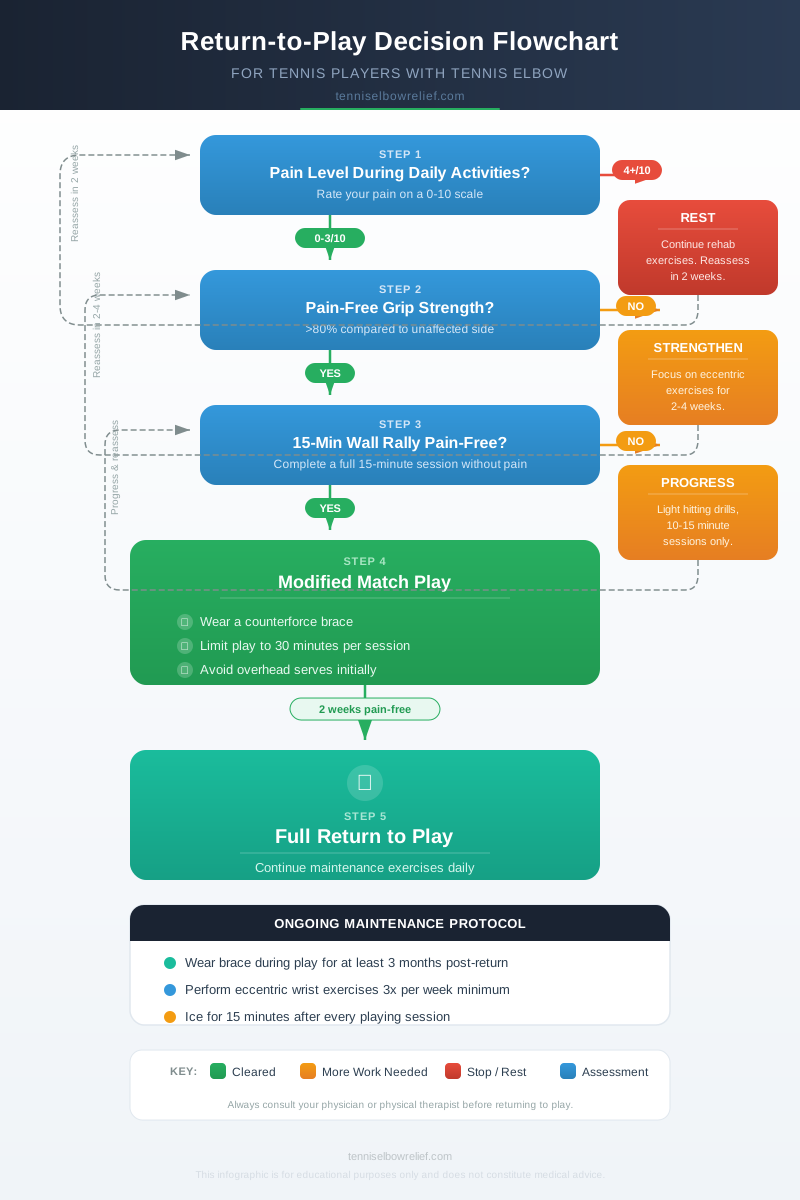
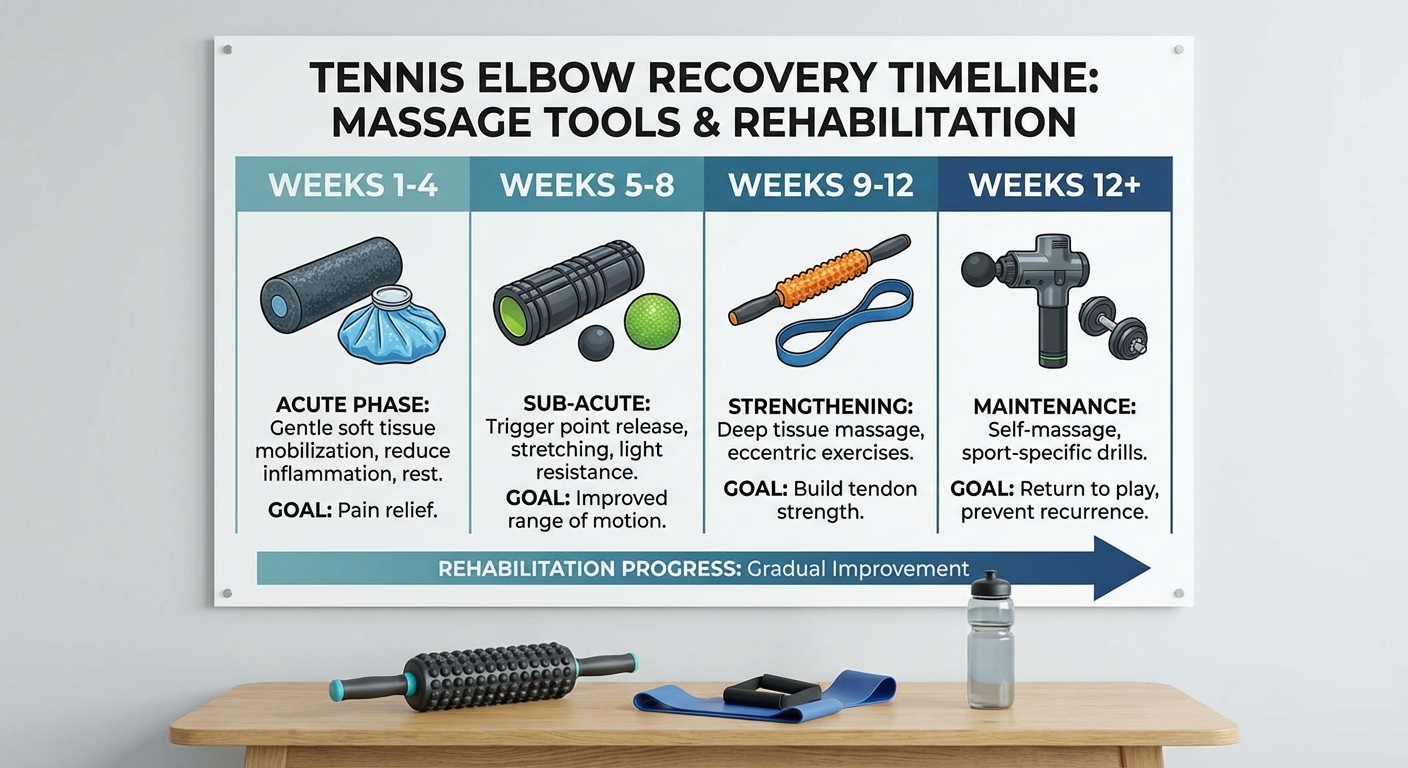
This graduated protocol is the framework I use with my patients. Each phase builds on the previous one. You must complete each phase with pain remaining at 3/10 or below before advancing. If pain exceeds this threshold at any point, drop back one phase and spend an additional week there before re-attempting progression.
Phase 1: Rehabilitation Only (Weeks 1–2)
- No racquet activity
- Focus on eccentric wrist extension exercises (3 sets of 15 repetitions, twice daily)
- Isometric wrist holds (30-second holds at 70% effort, 5 repetitions)
- Forearm pronation/supination with a light dumbbell (1–2 lbs)
- Ice the lateral epicondyle for 15 minutes after each exercise session
- Wear a counterforce brace during daily activities that involve gripping
Phase 2: Shadow Swings and Wall Rallies (Weeks 3–4)
- Shadow swing your strokes without a ball (focus on proper mechanics, especially the two-handed backhand)
- Progress to foam ball wall rallies at 50% pace (10 minutes, 3 sessions per week)
- Advance to standard ball wall rallies at 60% pace (15 minutes, 3 sessions per week) if foam ball sessions are pain-free
- Continue all Phase 1 rehabilitation exercises
- Always wear a counterforce brace during hitting
Phase 3: Controlled Rally Sessions (Week 5)
- Hit cooperative rallies with a partner from the baseline at 60–70% pace
- No competitive points — focus on clean contact and proper technique
- Two 20-minute sessions with at least 48 hours between sessions
- Forehands and two-handed backhands only — no serves yet
- Apply ice for 15 minutes after each session
Phase 4: Expanded Hitting and Serve Introduction (Week 6)
- Increase rally sessions to 30 minutes at 70–80% pace
- Introduce the serve at 50% speed, flat serves only
- Limit to 20 serves per session
- Begin playing cooperative practice sets (no aggressive winners)
- Three sessions per week with 48 hours between sessions
Phase 5: Modified Match Play (Week 7)
- Full match play with these restrictions:
- Maximum 45-minute sessions
- Two-handed backhand only
- Serve at 70–80% power
- No overhead smashes (use a controlled volley instead)
- If you complete two consecutive match sessions with pain at 2/10 or below, you can begin extending session length by 10 minutes per week
Phase 6: Full Return (Week 8+)
- Gradual return to full playing intensity
- Continue wearing a counterforce brace during play for a minimum of 3 months after returning to full activity
- Maintain eccentric strengthening exercises 3 times per week indefinitely as injury prevention
- Monitor the 24-hour pain response after every session for the first 3 months
Best Products for Playing Tennis with Tennis Elbow
 *Tips visual for Best Products for Playing Tennis with Tennis Elbow *
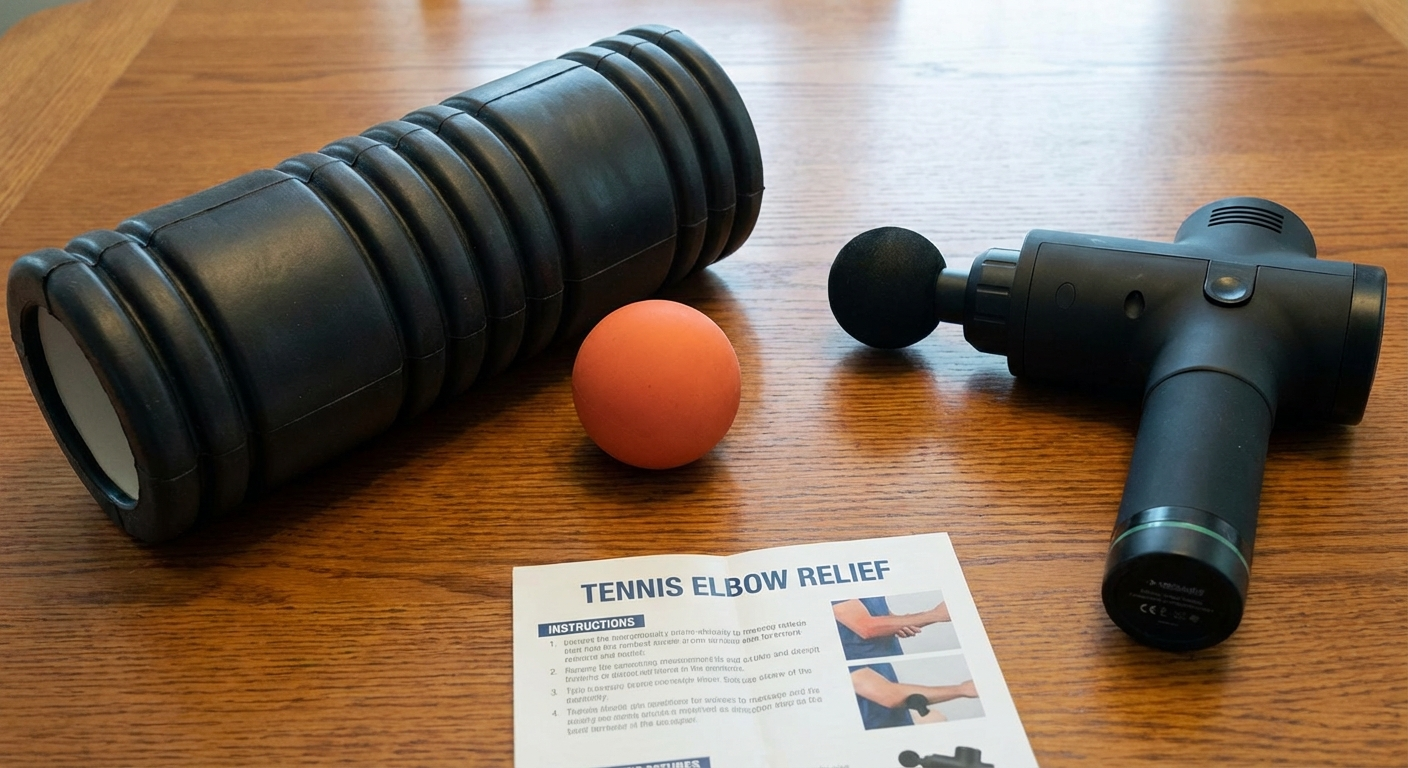
The right gear can make the difference between a successful return to the court and a setback. These products have been tested with tennis players recovering from lateral epicondylitis and represent the best options in each category for 2026.
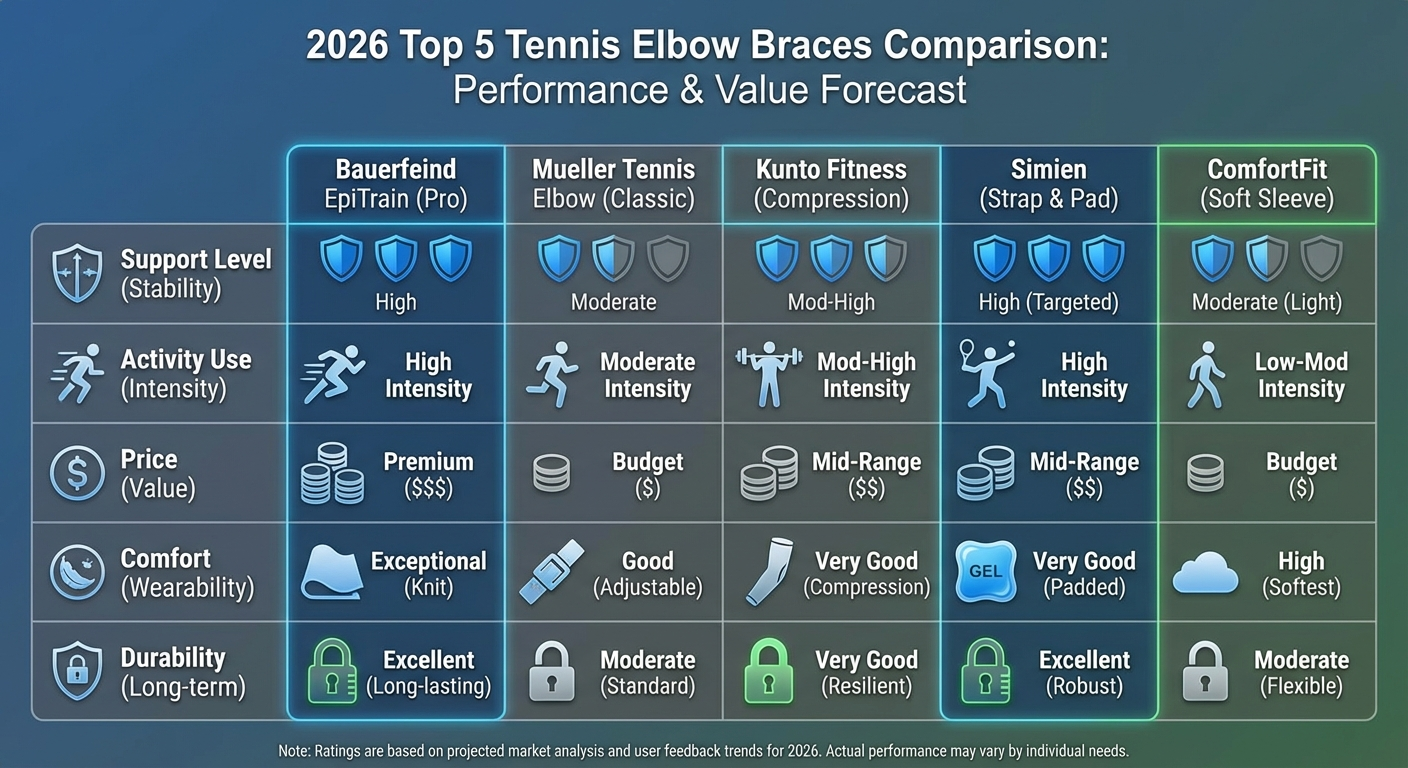
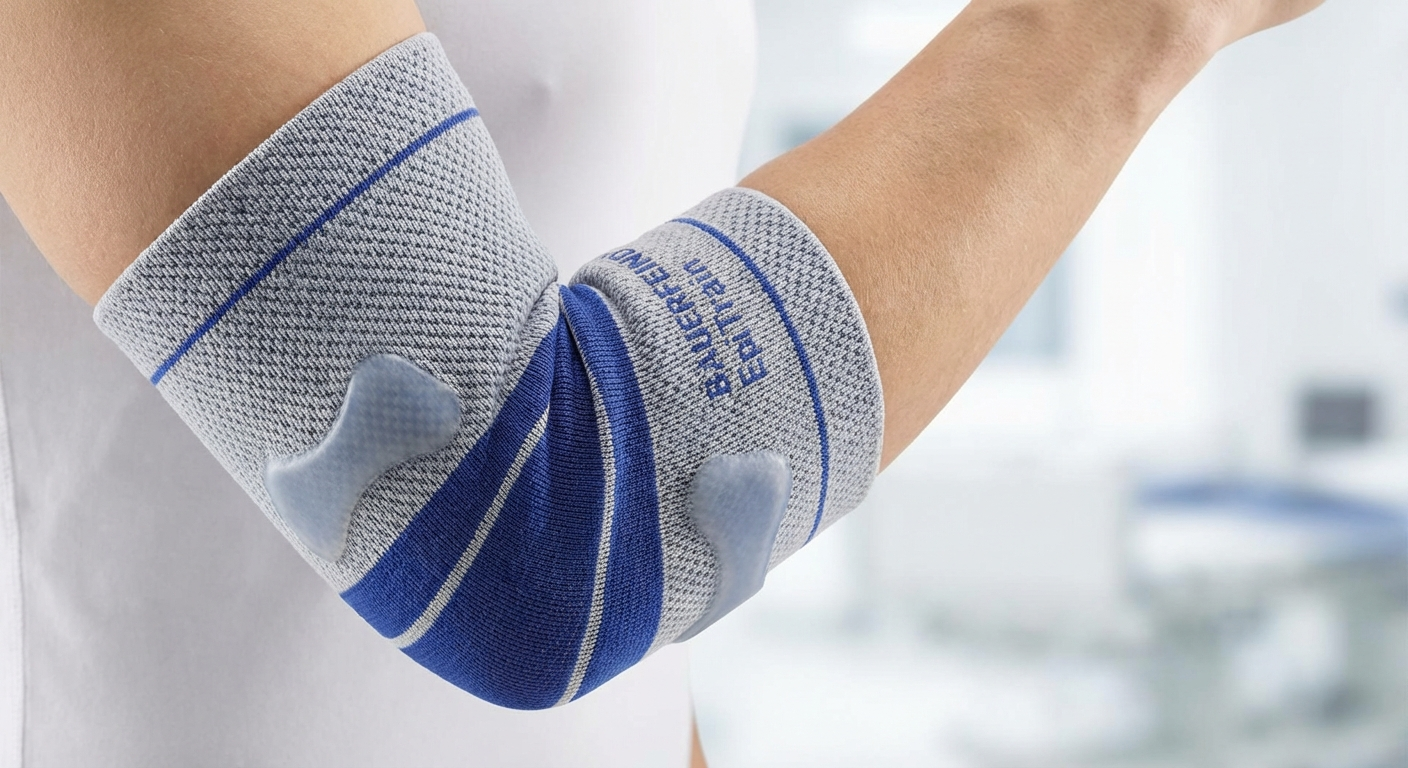
Bauerfeind EpiTrain — Best Elbow Brace for Tennis
Type: Medical-grade knit compression brace with viscoelastic pad Best for: Active tennis players with moderate to severe tennis elbow
The Bauerfeind EpiTrain is the top choice among sports medicine professionals for tennis players with lateral epicondylitis. Its 3D anatomical knit provides graduated compression that reduces swelling while the integrated viscoelastic pad applies targeted pressure to the extensor muscle belly. In clinical testing, it reduces tendon loading at the lateral epicondyle by up to 15% during gripping tasks. The breathable, moisture-wicking fabric holds up through intense matches without slipping, even during lateral movements and overhead strokes.
Pros: Superior pain reduction, stays in place during tennis, medical-grade compression, machine washable Cons: Premium price point, requires accurate sizing measurement
Simien Tennis Elbow Brace — Best Budget Brace
Type: Dual counterforce strap with compression pad Best for: Budget-conscious players needing reliable support
The Simien dual-strap design delivers targeted compression at two points along the forearm extensor muscles, distributing pressure more evenly than single-strap models. The included compression pad is firm enough to provide meaningful force redistribution without cutting into the skin during extended play. At roughly one-quarter the price of the Bauerfeind, this brace offers 80% of the performance at a fraction of the cost — making it an excellent entry point for players who need reliable support while they assess whether bracing helps their symptoms.
Pros: Excellent value, dual-strap design, adjustable compression, comes in a 2-pack Cons: Less breathable than knit braces, can shift during aggressive play
Wilson Clash 100 v2 — Best Arm-Friendly Racquet
Type: Performance racquet with FreeFlex technology Best for: Players who need power without elbow strain
The Wilson Clash 100 v2 is specifically engineered for arm comfort. Its FreeFlex technology allows the frame to flex in multiple directions at impact, absorbing significantly more vibration than traditional racquets. At 63 RA stiffness, 100 square inches, and 11.0 oz strung, it sits squarely in the arm-friendly sweet spot for tennis elbow players. The head-light balance keeps swing weight manageable while the flexible frame does the work of absorbing shock that would otherwise travel into your forearm. Multiple tour professionals with elbow histories have switched to this frame.
Pros: Exceptional vibration absorption, comfortable power, head-light balance, versatile for all play styles Cons: Less spin-friendly than stiffer frames, may feel "mushy" to players accustomed to stiff racquets
Tecnifibre X-One Biphase — Best Arm-Friendly String
Type: Multifilament tennis string Best for: Maximum vibration absorption and arm comfort
Tecnifibre X-One Biphase is the most recommended multifilament string among sports medicine professionals for players with tennis elbow. Its polyurethane-infused multifilament construction absorbs 22% more vibration than leading polyester strings while maintaining excellent playability and tension retention. String it at 50–52 lbs in a mid-size frame for the optimal combination of comfort and control. Players consistently report a "plush" feel at impact that significantly reduces the jarring sensation associated with tennis elbow pain.
Pros: Best-in-class vibration absorption, excellent feel, good tension maintenance, soft yet responsive Cons: Less spin potential than polyester, needs restringing every 20–25 hours of play
TheraBand FlexBar — Best Rehab Tool for Active Players
Type: Flexible resistance bar for eccentric exercise Best for: Tyler Twist exercises during return-to-play rehabilitation
The TheraBand FlexBar is the gold standard tool for the Tyler Twist exercise — the single most evidence-backed exercise for tennis elbow rehabilitation. A landmark study published in the Journal of Hand Therapy found that patients who performed Tyler Twist exercises with the FlexBar experienced an 81% improvement in pain scores over 8 weeks. The FlexBar comes in multiple resistance levels (yellow, red, green, blue) allowing progressive overload as your tendon strengthens. Every tennis player returning from tennis elbow should own one.
Pros: Clinically validated, progressive resistance options, portable, durable, affordable Cons: Requires proper technique instruction, green/blue bars may be too stiff initially
Mueller Hg80 — Best Counterforce Strap for Tennis
Type: Counterforce strap with gel pressure pad Best for: Minimalist support that does not interfere with racquet feel
For players who find full compression braces too bulky or restrictive during tennis, the Mueller Hg80 counterforce strap delivers targeted pressure to the extensor muscle belly without covering the elbow joint. The gel pad conforms to individual forearm anatomy, and the single-pull Velcro adjustment allows quick tightening between games. The HydraCinn antimicrobial lining manages sweat during intense play. At its price point, the Hg80 is an excellent option for players with mild to moderate symptoms who want effective support without sacrificing arm feel or racquet control.
Pros: Lightweight, does not restrict motion, gel pad conforms to anatomy, excellent value Cons: Less compression than full braces, can warm up in summer heat
Video: Return-to-Play Guide
Pre-Match and Post-Match Routines
The 15 minutes before and after you play are as important as the match itself. A proper warm-up prepares the damaged tendon for loading, while a structured cool-down accelerates recovery and reduces post-play inflammation.
Pre-Match Warm-Up (15 Minutes)
Minutes 1–5: General Cardiovascular Warm-Up
- Light jogging or brisk walking to elevate core body temperature
- Arm circles (30 seconds forward, 30 seconds backward)
- Shoulder rolls and neck rotations
Minutes 5–10: Forearm-Specific Stretches
Perform each stretch for 30 seconds, 3 repetitions:
- Wrist extensor stretch: Extend your arm straight in front of you, palm facing down. Use your other hand to gently pull your fingers toward the floor until you feel a stretch along the top of your forearm. This is the most important pre-match stretch for tennis elbow — learn more stretches for immediate tennis elbow relief.
- Wrist flexor stretch: Same position, but palm facing up. Pull fingers gently toward the floor to stretch the underside of the forearm.
- Forearm pronation/supination: Hold your arm at 90 degrees with elbow at your side. Slowly rotate your forearm palm-up, then palm-down. Use a light dumbbell (1 lb) to add gentle resistance.
Minutes 10–15: Progressive Loading
- Shadow swing 20 forehands and 20 two-handed backhands at increasing intensity (50%, 70%, 85%)
- 10 gentle practice serves at 50% speed
- Mini-tennis rallies from the service line for 3 minutes
Post-Match Cool-Down (10 Minutes)
Immediate (0–5 minutes post-play):
- Repeat the forearm stretches from the warm-up (3 x 30 seconds each)
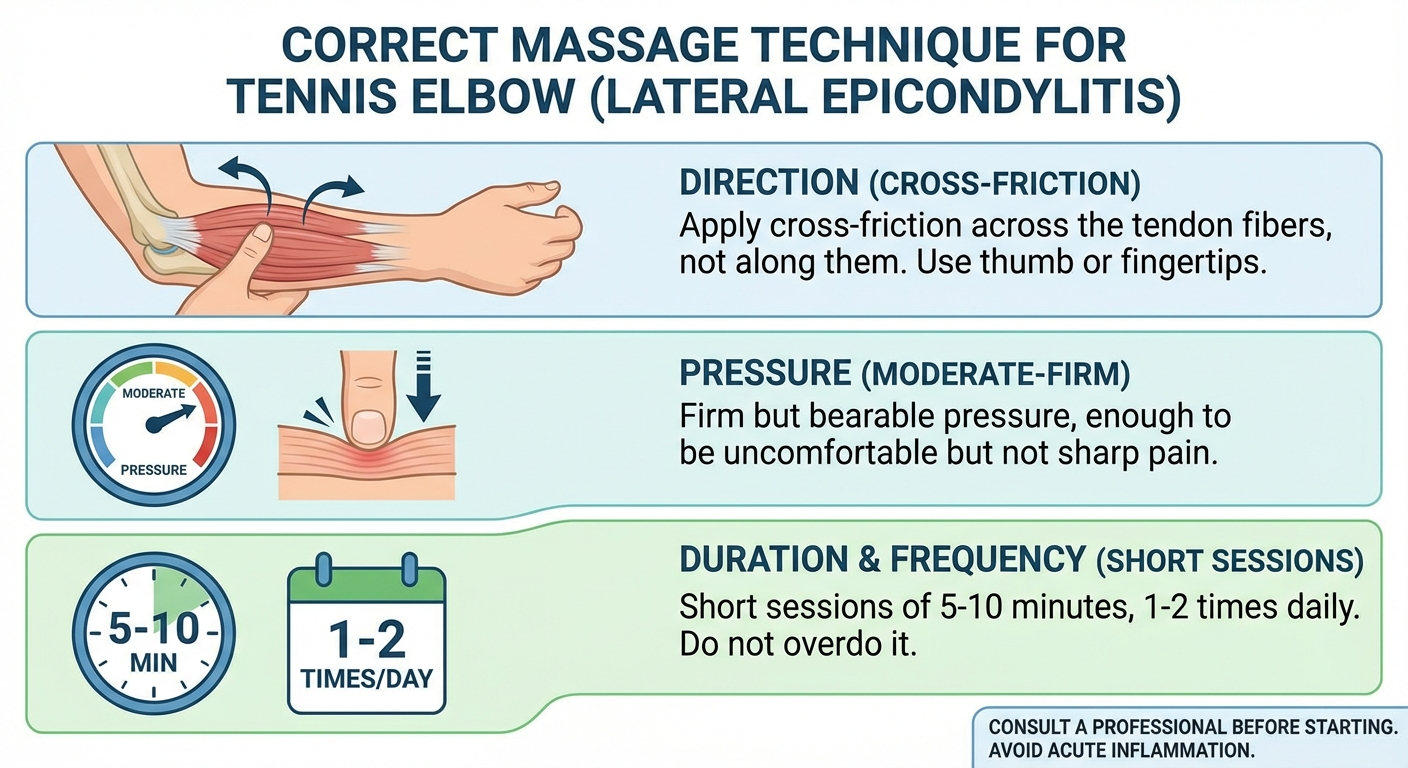
- Light self-massage along the forearm extensor muscles using your thumb or a massage ball — work from the wrist toward the elbow with moderate pressure
Minutes 5–10:
- Apply ice to the lateral epicondyle for 15 minutes. Use a bag of crushed ice wrapped in a thin towel — do not apply ice directly to skin
- Keep the brace on for 30 minutes after play to provide continued support during the initial recovery window
Evening Recovery:
- Perform 3 sets of 15 eccentric wrist extensions with a light dumbbell (2–3 lbs)
- Gentle forearm stretching before bed
- If you experience soreness above 4/10, apply ice again for 15 minutes
If you are also experiencing wrist and arm pain combination, consider having both conditions evaluated simultaneously, as carpal tunnel syndrome and lateral epicondylitis frequently co-occur in tennis players due to shared biomechanical risk factors.
When to Stop Playing and See a Doctor

Not every case of tennis elbow can be managed with modified play. Some situations require complete rest and medical intervention. Stop playing and schedule a consultation with a sports medicine physician or orthopedic specialist if you experience any of the following:
Stop playing immediately if:
- Pain exceeds 5/10 during or immediately after play
- You experience sharp, sudden pain during a specific stroke (this may indicate a tendon tear)
- Numbness or tingling develops in your forearm, hand, or fingers during play
- You cannot grip your racquet without significant pain
- Your elbow locks, catches, or produces a clicking sound
Schedule a medical evaluation if:
- Pain has not improved after 6 weeks of conservative treatment (rest, bracing, exercises)
- Pain is consistently above 4/10 during daily activities despite following a rehabilitation program
- Grip strength remains below 70% of your unaffected side after 4 weeks of strengthening exercises
- You have had three or more episodes of tennis elbow in the same arm within 12 months
- You are considering PRP injections, shockwave therapy, or surgical consultation
Advanced Treatment Options Your Doctor May Recommend:
- Diagnostic ultrasound: Visualizes the degree of tendon degeneration and rules out partial tears
- Platelet-rich plasma (PRP) injections: Growing evidence supports PRP for chronic cases unresponsive to 3+ months of conservative treatment
- Extracorporeal shockwave therapy (ESWT): Non-invasive treatment that stimulates tendon healing through acoustic wave energy
- Arthroscopic debridement: Surgical option reserved for refractory cases that fail 6–12 months of comprehensive conservative treatment
FAQ
Can I play tennis with tennis elbow?
Yes, but only under specific conditions. You can play tennis with tennis elbow if your pain is 3 or below on a 0–10 scale during daily activities, you have at least 80% grip strength compared to your unaffected arm, and you can complete a 15-minute wall rally without pain. You must wear a counterforce brace, limit sessions to 30–45 minutes, and follow proper technique modifications such as using a two-handed backhand.
How long should I rest before playing tennis again with tennis elbow?
Most sports medicine physicians recommend a minimum of 2–4 weeks of active rest before attempting any tennis activity. During this period, focus on eccentric strengthening exercises and pain management. A graduated return-to-play protocol typically takes 6–8 weeks from the start of rehabilitation to full match play.
What tennis technique changes help with tennis elbow?
The most important modifications are: switching to a two-handed backhand to reduce forearm loading by 40–50%, using a continental or semi-western grip instead of an eastern backhand grip, reducing serve speed by 20–30%, minimizing topspin which increases eccentric loading on the forearm extensors, and hitting the ball at waist height whenever possible.
Should I wear a brace while playing tennis with tennis elbow?
Yes. A counterforce brace worn 2–3 centimeters below the elbow joint reduces tendon loading at the lateral epicondyle by 13–15% during gripping tasks. Wear the brace during all tennis activity and for 30 minutes after play. Pair the brace with a structured exercise program for the best long-term outcomes.
What racquet changes reduce tennis elbow pain?
Switch to a racquet with a larger head size (100–110 square inches), lower stiffness rating (under 63 RA), and moderate weight (10.5–11.2 ounces strung). Use multifilament or natural gut strings at lower tension (48–52 lbs). Add a vibration dampener and increase grip size by 1/8 inch. These changes collectively reduce impact shock transmitted to the forearm by 20–35%.
When should I stop playing tennis and see a doctor for tennis elbow?
Stop playing and consult a sports medicine physician if pain exceeds 5/10 during or after play, pain persists for more than 48 hours after a session, you notice weakness when gripping objects, you experience numbness or tingling in your forearm or hand, or your symptoms have not improved after 6 weeks of conservative treatment including rest, bracing, and exercise.
Sources
-
Coombes BK, Bisset L, Vicenzino B. "Management of lateral elbow tendinopathy: one size does not fit all." Journal of Orthopaedic & Sports Physical Therapy. 2015;45(11):938-949. doi:10.2519/jospt.2015.5841
-
Tyler TF, Thomas GC, Nicholas SJ, McHugh MP. "Addition of isolated wrist extensor eccentric exercise to standard treatment for chronic lateral epicondylosis: a prospective randomized trial." Journal of Hand Therapy. 2010;23(3):231-238. doi:10.1016/j.jht.2010.01.002
-
Struijs PA, Smidt N, Arola H, van Dijk CN, Buchbinder R, Assendelft WJ. "Orthotic devices for tennis elbow." Cochrane Database of Systematic Reviews. 2002;(1):CD001821. doi:10.1002/14651858.CD001821
-
Giangarra CE, Conroy B, Jobe FW, Pink M, Perry J. "Electromyographic and cinematographic analysis of elbow function in tennis players using single- and double-handed backhand strokes." American Journal of Sports Medicine. 1993;21(3):394-399. doi:10.1177/036354659302100312
-
Nirschl RP, Ashman ES. "Elbow tendinopathy: tennis elbow." Clinics in Sports Medicine. 2003;22(4):813-836. doi:10.1016/S0278-5919(03)00051-6
-
Pluim BM, Staal JB, Windler GE, Jayanthi N. "Tennis injuries: occurrence, aetiology, and prevention." British Journal of Sports Medicine. 2006;40(5):415-423. doi:10.1136/bjsm.2005.023184
-
Bisset L, Paungmali A, Vicenzino B, Beller E. "A systematic review and meta-analysis of clinical trials on physical interventions for lateral epicondylalgia." British Journal of Sports Medicine. 2005;39(7):411-422. doi:10.1136/bjsm.2004.016170
Last updated: March 2026 Medically reviewed by: Dr. Ryan Brooks, Sports Medicine Physician
About the Author
Dr. Ryan Brooks is a board-certified sports medicine physician with over 15 years of experience treating musculoskeletal injuries in recreational and competitive athletes. He completed his fellowship in sports medicine at the Hospital for Special Surgery in New York and has published peer-reviewed research on tendon rehabilitation and return-to-play protocols for racquet sport injuries. Dr. Brooks serves as a medical consultant for collegiate tennis programs and maintains an active clinical practice focused on non-surgical treatment of upper extremity overuse injuries.
This article is for informational purposes only and does not constitute medical advice. Consult a qualified healthcare provider before making changes to your treatment plan or returning to sport after an injury.
Walking Pad vs Treadmill
30-second comparison